
When you’re looking at attic ventilation, it’s easy to compare the shelf price of a traditional electric fan to a solar model and think you’re saving money. But that initial price tag doesn’t tell the whole story. An electric fan adds to your utility bill every single month it runs, while a solar fan operates for free. To make a truly informed decision, you need to look beyond the upfront expense. This guide dives into the real cost to install a solar attic fan, calculating the long-term savings and showing how quickly this smart investment pays for itself.
Key Takeaways
- It’s an investment that pays you back: A solar attic fan runs for free and lowers your AC bills, often paying for itself in about three years, especially when you factor in the 30% federal tax credit.
- Protect your home from more than just heat: This fan works year-round to vent damaging heat in the summer and prevent moisture buildup in the winter, which helps stop mold, mildew, and rot.
- Prioritize quality for lasting performance: When choosing a fan, focus on durable materials like metal and a solid warranty. Professional installation is key to protecting your roof and ensuring the fan works effectively for years to come.
What Is a Solar Attic Fan and How Does It Work?
If you’ve ever felt a wave of heat hit you when opening your attic door in the summer, you know how hot that space can get. All that trapped heat can make your whole house warmer, forcing your air conditioner to work overtime. A solar attic fan is a simple and effective solution that tackles this problem right at the source. It’s a ventilation fan that uses the power of the sun to cool your attic, which in turn helps cool your entire home.
The Basics of Solar-Powered Ventilation
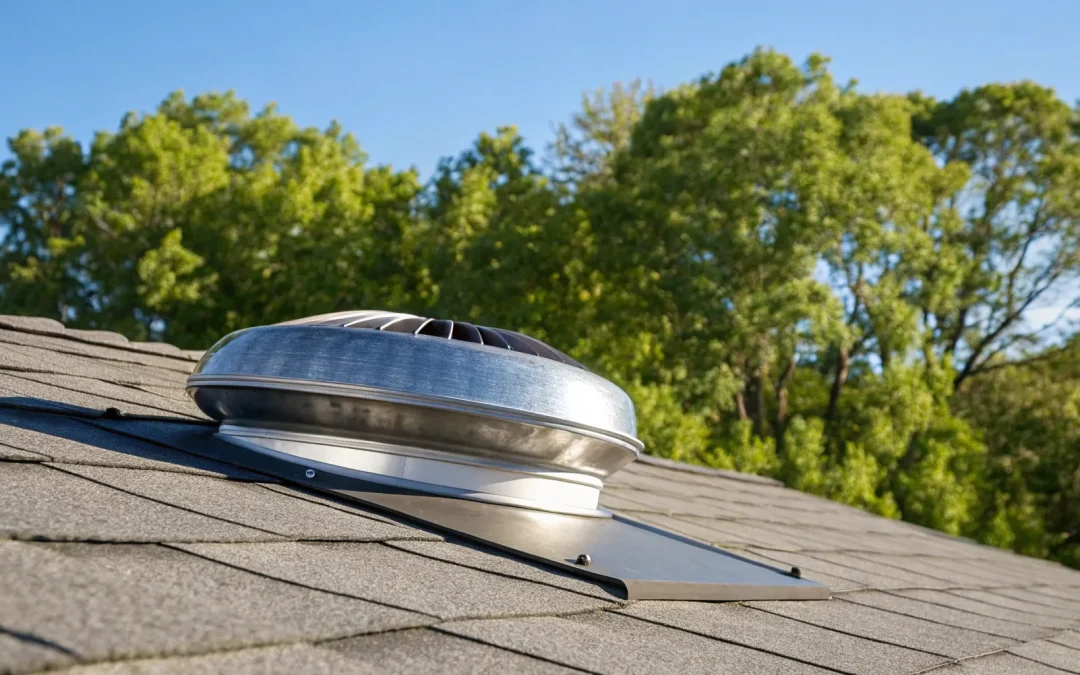
A solar attic fan works by actively moving hot air out of your attic while pulling in cooler air from the outside. Think of it as an exhaust system for the hottest part of your house. As the sun beats down on your roof, the fan’s solar panel captures that energy and uses it to power the motor, spinning the fan blades. This process creates consistent airflow, preventing heat from building up and radiating down into your living spaces.
Because it runs entirely on solar power, the fan doesn’t draw any electricity from your utility grid. This means it costs absolutely nothing to operate. By reducing the heat load in your attic, your air conditioning system doesn’t have to work as hard to maintain a comfortable temperature, which can lead to noticeable savings on your monthly energy bills. Plus, by preventing excess heat and moisture buildup, these fans can even help extend the life of your roof.
Understanding the Key Components
Solar attic fans are designed with simplicity and durability in mind. They consist of three main parts: a solar panel, a motor, and a protective housing. The solar panel is built to be highly efficient, often able to function well even in partial sunlight. This panel is connected to a quiet, high-performance motor that drives the fan blades.
The entire system is contained within a sturdy housing unit designed for easy installation on your roof. Quality models, like our Power-Save 1200, are built with strong, weather-resistant materials and feature protective screens to keep animals and debris out. These components work together to provide a reliable, long-term ventilation solution for your home without requiring any maintenance on your part.
How Much Does a Solar Attic Fan Cost?
Thinking about adding a solar attic fan is a great step toward a more comfortable and energy-efficient home. One of the first questions that comes to mind is, naturally, “What’s the price tag?” The good news is that installing a solar attic fan is one of the more affordable solar upgrades you can make. While the final cost depends on your specific home and the fan you choose, getting a handle on the average price range can help you plan your budget.
The total investment covers both the fan unit itself and the professional installation. It’s a project that pays you back over time through lower energy bills and a healthier home environment. Let’s break down the numbers so you know exactly what to expect.
Breaking Down the Average Installation Price
On average, you can expect the cost to install a solar attic fan to be around $675. Most homeowners find their final price falls somewhere in the $575 to $775 range. Think of this as a ballpark figure. Some projects might cost a bit less, while others with more complex requirements could cost more. This price typically includes the fan unit, all necessary mounting hardware, and the labor to get it installed and running perfectly on your roof. It’s a straightforward investment that starts saving you money from day one by reducing the workload on your air conditioner.
Equipment vs. Labor Costs
When you get a quote, the price is split between two main things: the equipment and the labor. High-quality solar attic fans generally cost between $300 and $600. This price reflects the quality of the solar panel, the motor’s durability, and the fan’s overall construction. The other part of the cost is professional installation, which usually runs from $100 to $300. While a DIY approach might seem tempting, having a professional handle the installation ensures it’s done safely, correctly, and without risking damage to your roof. Plus, professional installation is often required to keep the manufacturer’s warranty intact.
Other Potential Costs to Plan For
While the average costs give you a great starting point, a few other factors can influence your final price. The size of your attic, the type of roof you have, and its current condition can all affect the complexity of the installation. For instance, a steep or tiled roof might require more time and specialized equipment than a standard asphalt shingle roof. In some cases, your attic might need additional ventilation to work effectively with the new fan, which could be an added expense. The best way to get a precise number is to have a professional assess your home and provide a detailed quote. You can get a free solar estimate to see exactly what it would cost for your home.
What Factors Influence the Final Price?
When you’re budgeting for a solar attic fan, it helps to know that the final price tag isn’t a one-size-fits-all number. The total cost depends on several key factors specific to your home and needs. Understanding these variables will give you a much clearer picture of your investment and help you plan accordingly. Let’s walk through the main elements that shape the final installation price.
Your Home’s Size and Attic Space
The size of your attic is the first piece of the puzzle. A larger attic contains a greater volume of air that needs to be circulated and vented, which often requires a more powerful fan to do the job effectively. A smaller space might be fine with a standard model, but a sprawling attic will need a unit with a higher CFM (cubic feet per minute) rating to properly cool the space and prevent moisture buildup. Our team can help you determine the right size fan to ensure your solar attic fan performs efficiently for your home.
Your Roof Type and Condition
Next, we look at the canvas we’re working on: your roof. The material and current condition of your roof play a significant role in the installation process. A standard asphalt shingle roof is typically straightforward, but materials like metal, slate, or tile require special care and techniques, which can influence labor costs. Similarly, the pitch or steepness of your roof can add complexity. If your roof needs any repairs before installation, that will also be a factor. A thorough inspection helps us plan for a safe and secure installation that protects the integrity of your roof for years to come.
The Fan Model and Its Features
Not all solar attic fans are created equal, and the specific model you choose is a big part of the final cost. High-quality units are built with durable materials like steel and come with better warranties, offering more long-term value. Features can also affect the price. For example, some fans include a built-in thermostat or humidistat, which automatically turns the fan on and off to maintain optimal conditions. Our preferred model, the Power-Save 1200, is designed for durability and performance, but we can walk you through various options to find the one that fits your budget and goals.
Local Installation Rates
Finally, where you live matters. Labor costs for professional installation can vary based on your specific location. As a family-run solar firm that has served the Mid-Atlantic for decades, we have a deep understanding of the local market in Maryland, DC, Virginia, and the surrounding areas. The best way to get an accurate picture of what your project will cost is to get a detailed quote that accounts for your home’s unique characteristics and our region’s labor rates. You can get a free solar estimate from our team to get precise, no-surprise pricing.
Why Choose a Solar Attic Fan?
When you think about home upgrades, a fan in your attic might not be the first thing that comes to mind. But a solar attic fan is one of the smartest, most practical investments you can make. It tackles high energy bills, protects your home from damage, and runs entirely on its own, powered by the sun. It’s a simple solution that works quietly in the background to make your home more comfortable and efficient year-round. Let’s look at exactly how it accomplishes all of this.
Lower Your Energy Bills
One of the biggest perks of a solar attic fan is the direct impact on your wallet. During hot summer months, your attic can reach scorching temperatures, forcing your air conditioning system to work overtime to cool your home. By actively venting that superheated air, a solar attic fan reduces the strain on your HVAC unit. This means your AC runs less often, leading to noticeable savings on your monthly electricity bills. While a traditional electric attic fan can cost around $160 per year to operate, a solar fan costs nothing. Over time, these savings add up, allowing the fan to pay for itself.
Enjoy Eco-Friendly, Cost-Free Operation
Because these fans run entirely on solar power, they don’t draw any electricity from your home’s grid. This means they have zero operational costs—once installed, they work for free. This is a fantastic way to reduce your carbon footprint and embrace a more sustainable lifestyle. The fan works hardest on the sunniest, hottest days, which is precisely when you need it most, all without contributing to your utility bill. It’s a self-sufficient system that aligns perfectly with the other benefits of going solar, helping you create a greener, more independent home.
Protect Your Home from Moisture Damage
A solar attic fan does more than just cool your home in the summer; it protects it during the winter, too. Moisture from daily activities like showering and cooking rises and can get trapped in your attic. In colder months, this can lead to condensation, creating a damp environment perfect for mold, mildew, and even wood rot. A solar attic fan helps by circulating the air and venting this humid air outside. This constant ventilation keeps your attic dry, protecting the structural integrity of your roof and insulation while also improving your home’s overall air quality.
Finding the Best Solar Attic Fan for Your Money
Once you’ve decided a solar attic fan is right for your home, the next step is choosing the right model. With so many options on the market, it can be tough to know which one offers the best performance and long-term value. The key is to look beyond the price tag and consider factors like durability, efficiency, and the warranty that backs it up. A well-made fan will not only cool your attic effectively but will also run reliably for years with zero cost, making it a smart investment in your home’s comfort and energy efficiency.
We’ve installed countless fans over the years, and we’ve learned what separates a great product from a mediocre one. Let’s walk through what to look for so you can feel confident in your choice.
A Look at Our Power-Save 1200
We proudly install the Power-Save 1200 because we believe it offers the best combination of performance, durability, and value for homeowners in our area. This fan is built with high-quality components designed to withstand Mid-Atlantic weather, from hot, humid summers to icy winters. It features a high-efficiency motor that moves a significant amount of air, helping to drastically lower attic temperatures without using any electricity from the grid. Plus, it comes with a robust warranty, giving you peace of mind that your investment is protected. It’s a straightforward, powerful solution that gets the job done right.
How Other Top Brands Compare
You’ll find a wide variety of solar attic fans at big-box hardware stores and online. While some of these may have an attractive initial price, they often compromise on materials and build quality. Many off-the-shelf models use plastic housings that can become brittle and crack over time, unlike the durable metal construction of higher-quality fans. It’s also important to consider the power of the included solar panel and the fan’s CFM (cubic feet per minute) rating. A fan that’s too weak for your attic size won’t provide the benefits you’re looking for. Professional-grade models are designed as a complete system, ensuring the panel, motor, and fan blades all work together for optimal performance.
What to Look For When Comparing Fans
When you’re comparing different solar attic fans, here are a few key features to keep on your checklist. First, check the CFM rating to ensure it’s powerful enough for your attic’s square footage. Next, look at the construction materials—powder-coated steel or aluminum will always outlast plastic. A built-in thermostat is also a must-have, as it allows the fan to run automatically only when it’s needed, extending the motor’s lifespan. Finally, always ask about the warranty. A long-term warranty on both the fan and the solar panel is a strong indicator of a manufacturer’s confidence in their product.
How to Save Money with Tax Credits and Rebates
The great news is that the sticker price for a solar attic fan isn’t what you’ll actually pay. Thanks to some fantastic government and utility incentives, you can bring that cost down significantly. Let’s walk through the main ways you can save.
Understanding the Federal Solar Tax Credit
One of the biggest money-savers is the federal solar tax credit. This isn’t a simple rebate; it’s a powerful credit that directly reduces what you owe on your federal taxes. You can claim 30% of the total cost of your solar attic fan installation—parts and labor included. This incentive makes adopting clean energy much more affordable and is a huge factor in lowering the upfront cost. Think of it as the government’s way of saying “thank you” for making a smart, eco-friendly choice for your home. It’s a key part of the many benefits of solar for homeowners.
Finding State and Local Rebates
The savings don’t stop at the federal level. Many states and even local municipalities offer their own incentives to encourage homeowners to go solar. These can come in the form of direct cash rebates, property tax exemptions, or state tax credits that you can stack on top of the federal one. Because these programs vary by location, it’s worth doing a little homework to see what’s available in your area. A quick search for your state’s energy programs can uncover extra savings that make your solar attic fan an even better investment.
Checking for Utility Company Incentives
Don’t forget to check with your local utility provider. Many power companies offer their own programs to encourage energy efficiency. You might find rebates for installing energy-saving appliances like a solar attic fan or other performance-based incentives that pay you back over time. These programs are a win-win: you lower your energy consumption, which helps the utility manage demand on the grid, and you get paid for it. Give your provider a call or check their website to see what incentives they offer. It’s a simple step that can lead to surprising savings when you contact us for an installation.
How Do Solar Attic Fans Compare to Other Cooling Methods?
When you’re trying to keep your home comfortable, you have a few options for attic ventilation. While traditional electric fans are common, solar attic fans offer a compelling alternative, especially when you look at the long-term costs and benefits. Let’s break down how they stack up against each other.
Comparing Costs: Solar vs. Traditional Fans
Looking at the initial price tag, a traditional electric attic fan might seem like the more budget-friendly choice. But that upfront cost doesn’t tell the whole story. An electric fan needs to be plugged in, and running it can add around $160 to your electricity bill every single year. In contrast, a solar attic fan runs entirely on sunlight, which means it costs you absolutely nothing to operate. So, while the initial investment for a solar model is a bit higher, you completely eliminate that ongoing running cost. It’s the difference between a one-time purchase and a new, recurring expense on your utility bill.
Calculating Your Long-Term Savings
So, how quickly do those savings add up? You might be surprised. A solar attic fan can often pay for itself in about three years when compared to a standard electric model. Think about it: once the fan is installed, you’re done paying. You won’t see it on your monthly power bill ever again. This is how a slightly higher upfront cost transforms into significant long-term savings. Instead of paying to cool your attic year after year, you make a smart, one-time investment that protects your home and your wallet. It’s one of the key benefits of going solar—predictable costs and lasting value.
Is a Solar Attic Fan a Good Investment for You?
Making any upgrade to your home is a big decision, and you want to know you’re putting your money somewhere smart. When it comes to a solar attic fan, the question isn’t just about the initial price tag—it’s about the long-term value it brings to your home and your wallet. Think of it this way: you’re investing in a solution that actively works to lower your cooling costs, protect your roof, and reduce your home’s carbon footprint, all without adding a single cent to your monthly utility bill.
Unlike a standard electric fan that draws power from the grid, a solar attic fan runs entirely on its own, powered by the sun. This means that while there’s an upfront cost for the equipment and installation, the operational cost is zero. Over time, these fans often pay for themselves through significant energy savings. The real question is whether those savings and benefits align with your home’s specific needs and your financial goals. To figure that out, you need to look at the return on investment and consider a few key factors about your property.
How to Calculate Your Return on Investment
Let’s talk numbers. While a solar attic fan might have a higher initial price than a traditional electric model, its total cost over five or ten years is often much lower. Why? Because you’re not paying for electricity to run it. The average cost to install a solar attic fan is typically between $575 and $775. Compared to a regular fan, a solar model can save you enough on electricity to pay for itself in about three years. From that point on, the savings go directly back into your pocket. Your return on investment comes from the combination of eliminated operational costs and the reduced workload on your air conditioning system, which no longer has to fight against a superheated attic.
Deciding if a Solar Fan Makes Sense for Your Home
A solar attic fan is a great fit for many homes, but it’s not a one-size-fits-all solution. The final cost and overall effectiveness depend on your specific situation. Factors like the size of your home, the structure of your roof, and your attic’s current condition all play a significant role. If your upstairs rooms feel stuffy in the summer or your AC runs constantly, a solar attic fan could be a game-changer. It’s also an excellent tool for preventing moisture buildup and potential mold growth during humid months. The best way to know for sure is to get a professional assessment. A quick evaluation can help you understand the potential savings and find the right fit for your home. You can get a free solar estimate to see exactly how it would work for you.
Related Articles
- Are Solar Attic Fans Worth It? A Cost-Benefit Guide
- Solar Attic Fan 101: Everything You Need to Know
Frequently Asked Questions
Will a solar attic fan still work on cloudy days? Yes, it will. High-quality solar panels, like the ones used in our recommended fans, are very efficient and don’t need direct, bright sunlight to operate. They can generate enough power to run the fan from ambient daylight, meaning your attic still gets ventilation even on overcast days. While the fan will run at its highest speed in full sun, its ability to function in lower light ensures your attic is consistently protected from heat and moisture buildup.
Are solar attic fans noisy? Not at all. Modern solar attic fans are designed to be incredibly quiet. They use high-efficiency, direct-current motors that produce very little noise, so you likely won’t even hear it running from inside your home. This is a big improvement over some older, traditional electric fans that could create a noticeable hum or vibration. You get all the benefits of a cooler attic without any disruptive background noise.
How long does a solar attic fan last? You can expect a high-quality solar attic fan to last for many years. The lifespan depends on the quality of the components, which is why we recommend models built with durable materials like steel or aluminum instead of plastic. The solar panel and motor in a well-made unit are typically covered by long-term warranties, often for 10 years or more, which is a great indicator of their durability and expected performance over time.
Does a solar attic fan require any maintenance? One of the best things about a solar attic fan is that it’s virtually maintenance-free. Once it’s professionally installed, there’s nothing you need to do. The unit is self-contained and built to withstand the elements. Quality models also include a protective screen that keeps leaves, debris, and animals out of the fan, so you don’t have to worry about cleaning it. It’s a true “set it and forget it” home improvement.
Will cutting a hole in my roof for the fan cause leaks? This is a common and very valid concern, but when the installation is done correctly by a professional, the risk of leaks is eliminated. A proper installation involves using flashing, which is a metal barrier that directs water away from the opening, along with industrial-grade sealants. An experienced installer knows exactly how to integrate the fan into your roof seamlessly, ensuring it’s completely weatherproof and maintains the integrity of your roof structure.
Recent Comments