
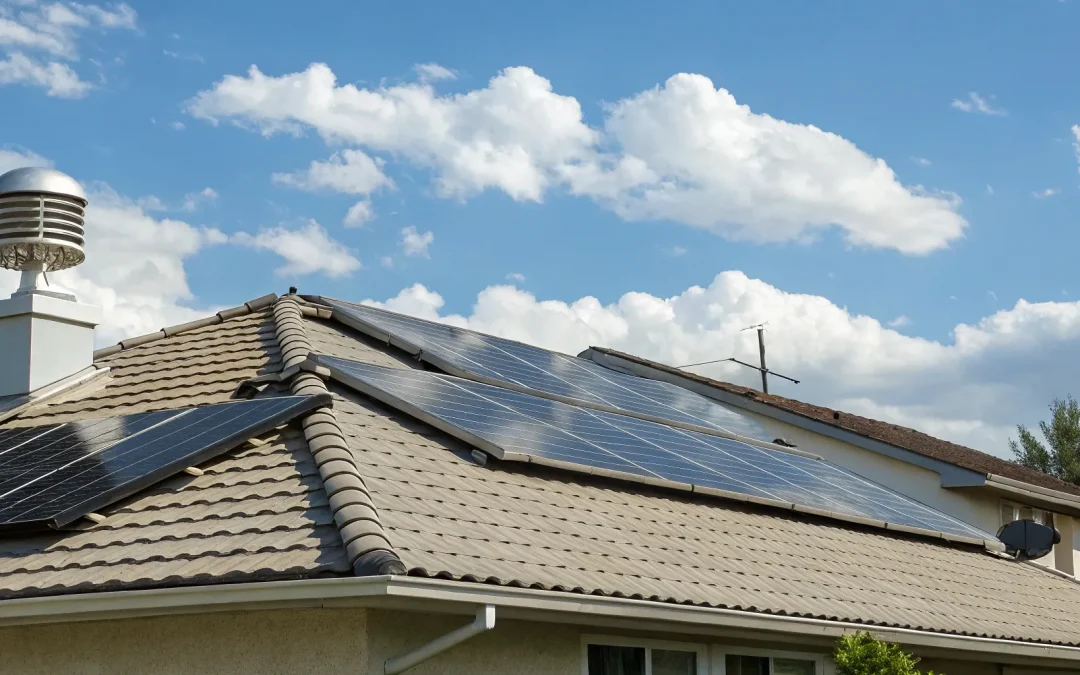
When you think about home improvements that pay for themselves, you might picture a kitchen remodel or new windows. But one of the smartest investments you can make is one you’ll never see. Your attic plays a huge role in your home’s overall energy efficiency, and keeping it properly ventilated is key to lowering utility costs. A solar powered gable vent fan is a strategic upgrade that works tirelessly to protect your home. By actively removing trapped heat and moisture, it reduces the strain on your air conditioner, helps extend the life of your roof, and makes your entire home more comfortable, all without adding a cent to your electricity bill.
Key Takeaways
- Lower Your Cooling Bills by Tackling Attic Heat: A solar gable fan directly targets the hottest part of your home—the attic—to prevent heat from radiating into your living spaces. This reduces the workload on your AC unit, leading to real savings on your summer energy bills.
- Focus on a Balanced System, Not Just the Fan: For a solar fan to work effectively, it needs proper placement and sufficient intake from soffit vents. Choosing a quality model with the right CFM is important, but ensuring it’s part of a balanced ventilation system is the key to its success.
- Get Automatic Cooling with Minimal Upkeep: These fans are designed to be a “set it and forget it” solution. They run on their own power when the sun is out and require little more than an occasional cleaning to operate efficiently for years.
What is a Solar-Powered Gable Fan?
A solar-powered gable fan is a simple but effective tool for keeping your home comfortable. Think of it as a dedicated fan for your attic, powered entirely by the sun. It’s designed to tackle one of the biggest sources of heat in your home: the attic. By actively moving hot, stagnant air out of this space, it helps regulate your home’s overall temperature without adding a cent to your electricity bill. These fans are a smart addition to any home, especially in the Mid-Atlantic, where summer heat and humidity can really put your air conditioner to the test.
How Does It Work?
The concept is straightforward. As the sun beats down on your roof, your attic can get incredibly hot—often reaching temperatures well over 150°F. A solar-powered gable fan uses a small, dedicated solar panel to power a motor that spins the fan blades. This fan is mounted on your attic’s gable vent, where it actively pushes the superheated air out. As the hot air is expelled, cooler, fresh air is pulled in through your existing soffit or ridge vents. This continuous circulation prevents heat from building up and radiating down into your living spaces, creating a more comfortable environment throughout your home.
What Are the Key Components?
A typical solar gable fan system includes a few key parts. First, there’s the fan unit itself, which houses the motor and blades. This is connected to a solar panel that captures sunlight and converts it into electricity. Some of the most effective solar attic fans also come with a hybrid AC/DC inverter. This clever component allows the fan to run on solar power during the day and automatically switch to your home’s electricity at night or on cloudy days. This ensures you get consistent, 24/7 ventilation for maximum effectiveness, no matter the weather.
What Are the Benefits for Your Home?
Installing a solar gable fan brings several immediate advantages. The most significant benefit is a cooler, more comfortable home. By reducing the heat load in your attic, your air conditioning system doesn’t have to work as hard to maintain a pleasant temperature, which can lead to noticeable savings on your cooling bills. This reduced strain also helps extend the lifespan of your HVAC unit. Beyond comfort and savings, a well-ventilated attic helps protect your roof structure from heat and moisture damage, preserving the integrity of your shingles and decking. It’s one of the many benefits of using solar technology to improve your home.
What to Look For in a Solar Gable Fan
When you start shopping for a solar gable fan, you’ll quickly see that they aren’t all built the same. To find the right one for your home, you need to look past the price tag and consider the features that will deliver real performance and long-term value. A great fan operates efficiently, lasts for years, and keeps your attic cool without you having to think about it.
The key is to focus on a few core components. Think about how the fan operates—does it have automatic controls, or will you need to manage it? The quality of the motor is also crucial, as it determines the fan’s lifespan and noise level. You’ll also want to consider the power of its solar panel and its airflow capacity, which is measured in CFM, to ensure it’s strong enough for your attic space. Finally, think about whether you need it to run after the sun goes down. Some models offer battery backup or hybrid capabilities for continuous operation. Understanding these features will help you choose a fan that’s a perfect fit for your home’s needs.
Automatic Temperature Controls
One of the most convenient features to look for is an automatic thermostat. Fans with this function monitor your attic’s temperature and turn on automatically once it hits a certain point, often around 88°F. This set-it-and-forget-it approach means you get consistent ventilation right when you need it most, without having to lift a finger. It’s an incredibly efficient system because the fan only runs when necessary, which helps extend its lifespan and ensures you’re not wasting energy. This simple feature takes all the guesswork out of keeping your attic cool and dry throughout the hottest parts of the day.
Motor Quality and Durability
The motor is the heart of your solar gable fan, so its quality directly impacts performance and how long it will last. Look for models that feature a high-quality brushless motor. These are designed to run quietly and are built for longevity, which means you’ll deal with far less maintenance over the years. A durable motor ensures your fan can stand up to the demands of daily operation, providing reliable cooling season after season. Investing in a fan with a superior motor is one of the best ways to make sure you get a great return on your solar attic fan investment.
Solar Panel Power
The power of the solar panel determines how effectively your fan can run. Measured in watts, the panel’s rating tells you how much energy it can generate from sunlight. A fan with a 40-watt panel, for example, will be more powerful than one with a 20-watt panel, allowing it to spin faster and move more air. The right wattage for your home depends on your attic size and how much direct sunlight your roof gets. A more powerful panel ensures your fan performs well even on days that aren’t perfectly clear, giving you more consistent and effective ventilation when you need it.
Airflow Capacity (CFM)
Airflow capacity, measured in Cubic Feet per Minute (CFM), tells you how much air a fan can move. This is one of the most important specs to check because you need a fan that’s properly sized for your attic. A fan with a higher CFM rating can ventilate a larger space. For instance, some models can effectively cool attics up to 1,800 square feet or more. Choosing a fan with the right CFM for your home ensures it can create enough circulation to push out hot, moist air, protecting your roof structure and helping to lower your cooling costs.
Battery Backup Options
While most solar gable fans run exclusively on sunlight, what happens on cloudy days or after sunset? Some models offer the flexibility of a battery backup. This feature allows the fan to store excess solar energy during the day to run when the sun isn’t out. You can often add a solar panel battery backup system or an adapter that connects the fan to your home’s electricity as a secondary power source. This is a great option if you live in an area with frequent cloudy days or want to continue circulating air overnight to prevent heat buildup.
Hybrid Power Capabilities
For truly uninterrupted, 24/7 performance, look for a solar gable fan with hybrid power capabilities. These systems come equipped with an AC/DC inverter that allows the fan to switch seamlessly between solar power and your home’s grid electricity. During the day, it runs entirely on the sun. At night or on overcast days, it automatically draws a small amount of power from your home to keep running. This ensures your attic remains ventilated around the clock, offering the ultimate peace of mind and maximum protection against heat and moisture buildup, regardless of the weather or time of day.
Understanding Performance and Efficiency
A solar gable fan is a smart piece of tech, but its effectiveness isn’t just plug-and-play. How well it performs depends on your local climate, the season, and the specific needs of your attic. Think of it less as a simple appliance and more as a component of your home’s overall energy system. When you understand the factors that influence its efficiency, you can make sure you’re getting the most out of your investment.
From sunny summer days to overcast winter afternoons, the fan’s output will change. Its goal is to keep your attic from becoming an oven in July and a moisture trap in January. Proper ventilation is a year-round job, and a solar fan is designed to tackle it without adding a cent to your utility bill. Let’s look at how these fans work through different conditions and what you need to know to ensure your attic gets the airflow it needs to protect your home and lower your energy costs.
How They Perform Seasonally
A solar gable fan is a true year-round workhorse. During the hot summer months, its primary job is to pull superheated air out of your attic, which can otherwise reach temperatures of 150°F. By constantly circulating the air, it reduces the strain on your air conditioning system, helping it run more efficiently and saving you money. In the winter, the fan’s role shifts to moisture control. Warm, moist air from your living space can get trapped in the attic, leading to condensation, mold, and even ice dams. The fan helps vent this damp air, keeping your attic dry and protecting your home’s insulation and structural integrity.
The Impact of Weather
Since these fans are powered by the sun, their performance is directly tied to the weather. They operate at peak capacity on bright, sunny days—which is exactly when your attic needs the most help. But what about cloudy days? High-quality solar attic fans use efficient solar panels that can still generate enough power to run on overcast days, though at a reduced speed. They are built to be durable and withstand the elements, from heavy rain to high winds, so you don’t have to worry about their reliability. The best part is that they use the sun’s free, renewable energy, so they cost nothing to operate, rain or shine.
Day vs. Night Operation
Standard solar gable fans are designed to run when the sun is out. This timing is incredibly efficient because, as one expert puts it, “the fan works best when the sun is out, which is when your attic is hottest.” It tackles the heat problem at its source, preventing that thermal buildup from radiating down into your living space. For homeowners who want around-the-clock ventilation, some models come with a solar panel battery backup or hybrid power adapters. These systems store excess solar energy during the day or can switch to your home’s electricity, ensuring the fan can run at night or during extended periods of poor weather.
Calculating Your Coverage Needs
Choosing the right size fan is critical for effective ventilation. Fans are rated by their airflow capacity, measured in cubic feet per minute (CFM). A fan that’s too small won’t be able to move enough air, while one that’s too large might not be necessary. To find the right fit, you’ll need to know the square footage of your attic. A good rule of thumb is to aim for about 1 CFM for every square foot of attic space. For example, a 20-watt fan can often ventilate spaces up to 1,800 square feet. To get a precise recommendation, it’s always best to get a free solar estimate from a professional who can assess your specific needs.
Achieving Balanced Ventilation
For a solar gable fan to work its magic, your attic needs a balanced ventilation system. This means it needs a way for fresh, cool air to get in while the fan pushes hot, stale air out. This intake air typically comes from soffit vents located under the eaves of your roof. Without enough intake, the fan can create negative pressure, which might pull conditioned air from your living areas up into the attic—the opposite of what you want! Proper attic ventilation is crucial for protecting your home from heat and moisture damage, and ensuring your fan is part of a balanced system is the key to unlocking all its benefits.
Getting Installation and Placement Right
A solar gable fan is only as good as its installation. Where you place it and how you secure it will make all the difference in its performance and longevity. While it might seem like a straightforward project, a few key details can determine whether your fan effectively cools your attic or just becomes a roof ornament. Proper placement ensures you’re creating an efficient airflow path, pulling hot air out and allowing cooler air to enter from your soffit vents.
Getting this right from the start prevents headaches down the road, like poor performance or, worse, a leaky roof. Whether you’re a seasoned DIYer or prefer to leave it to the experts, understanding the fundamentals of installation is crucial. We’ll walk through the most important considerations, from picking the perfect spot to avoiding common mistakes that can undermine your fan’s effectiveness. Taking the time to plan the installation will help you get the full benefits of a cooler, more energy-efficient home.
Finding the Best Location
The goal of a gable fan is to create a consistent, cross-ventilating breeze through your attic. To do that, placement is everything. You’ll want to install the fan on the gable wall that’s furthest from your attic’s main air inlets, which are typically the soffit vents under your eaves. This positioning creates the longest possible path for air to travel, ensuring the fan pulls hot, stale air from the entire space rather than just the area right next to it. It’s also important to consider how the fan interacts with other vents. For optimal circulation, gable vents should work in tandem with ridge vents, not against them.
Professional vs. DIY Installation
Deciding between a DIY project and hiring a professional comes down to your comfort level with tools, heights, and electrical wiring. For a handy homeowner, installing a solar gable fan can be a satisfying weekend project. Most kits are designed for self-installation, with the fan mounting directly to your existing gable vent. However, if you’re not comfortable working on a ladder or cutting into your home’s exterior, calling a professional is the safest bet. A pro will ensure the fan is securely mounted, the solar panel is optimally positioned, and everything is sealed watertight. If you want peace of mind, our team can handle the solar attic fan installation for you.
Tools and Equipment You’ll Need
If you decide to tackle the installation yourself, you’ll need a few basic tools to get the job done. Make sure you have a sturdy ladder, a drill with various bits, a caulk gun with weatherproof sealant, a tape measure, and standard hand tools like screwdrivers and a wrench set. Some fan kits make the process easier by including long cords for the solar panel, giving you more flexibility in where you place it for maximum sun exposure. Before you start, read the manufacturer’s instructions carefully and make sure you have all the required hardware on hand.
Key Safety Precautions
Safety should always be your top priority, especially when working on the exterior of your home. Always use a stable, properly positioned ladder and consider having a spotter. When you’re mounting the solar panel on the roof, be mindful of your footing. The most critical safety step is ensuring a perfect seal around any holes you create. Any penetration in your roof is a potential entry point for water. Use a high-quality, weatherproof sealant to caulk around the mounting brackets and any wire pass-throughs. A small leak can lead to significant water damage over time, so don’t cut corners on this step.
Common Mistakes to Avoid
A couple of common missteps can prevent your solar gable fan from working efficiently. First, don’t forget to block off other nearby vents that could “short-circuit” the airflow. If you have other gable vents or high-mounted attic vents, the fan may just pull air from those openings instead of from the soffits down below. This creates a small loop of air movement at the top of your attic, leaving the rest of the space stagnant. Also, understand the fan’s limitations. A solar fan is great for managing heat but may not be powerful enough to handle serious, year-round moisture issues.
How to Maintain Your Solar Gable Fan
One of the best things about solar attic fans is how little maintenance they require. Since they run on their own power source and have few moving parts, you don’t have to worry about complex upkeep. However, a little bit of care goes a long way in making sure your fan runs efficiently for its entire lifespan. A few simple checks throughout the year will keep your fan in top shape, protecting your investment and ensuring your attic stays cool and dry. Think of it less as a chore and more as a quick check-in to keep everything running smoothly.
Simple Cleaning Tasks
Keeping your solar gable fan clean is straightforward and doesn’t take much time. The most important task is to ensure the solar panel has a clear view of the sun. Every few months, check for and trim any new tree branches that might be casting a shadow. You’ll also want to clear away any leaves, dirt, or debris that might have accumulated on the panel itself, as this can block sunlight and reduce its power output. A quick wipe-down of the fan blades and housing with a damp cloth can also prevent dust and grime from building up, helping the fan operate at peak efficiency.
What to Inspect Regularly
A simple inspection schedule can help you catch any potential issues before they become problems. About every six months, do a quick visual check. Look at the fan blades, vents, and protective screens to make sure they’re clean and free of obstructions like nests or leaves. Once a year, it’s a good idea to do a slightly more thorough inspection. Listen for any unusual noises from the motor and check that all electrical connections are secure. And anytime a major storm rolls through, it’s wise to take a quick look to ensure there’s no visible damage to the unit or the solar panel.
Troubleshooting Common Problems
Solar attic fans are incredibly reliable, but occasionally you might run into a snag. If the fan isn’t running on a sunny day, the first step is to check the solar panel for any debris that might be blocking the sun. If the fan seems to be running but isn’t moving much air, check for blockages in the vents or screens. One potential issue with any powered vent is negative pressure, which happens when the fan pulls conditioned air from your living space into the attic. This usually means your attic lacks enough intake vents. Ensuring your home has balanced ventilation is key, which is why a professional solar attic fan installation is so important.
Tips to Extend Your Fan’s Lifespan
Your solar gable fan is built to last, but you can help it reach its full potential with minimal effort. The single most effective thing you can do is perform the simple cleaning and inspection tasks we’ve covered. Keeping the solar panel clear and the fan blades unobstructed ensures the motor doesn’t have to work harder than necessary, which reduces wear and tear over time. If you ever notice something that doesn’t seem right or you’re just not comfortable performing an inspection yourself, don’t hesitate to contact a professional. A quick service call can keep your fan running efficiently for years to come.
Is It Worth the Investment? A Cost Breakdown
When you’re considering any home upgrade, the bottom line matters. A solar attic fan is no different. You want to know what it will cost upfront and, more importantly, what you’ll get back in return. The good news is that this is one of those home improvements that starts paying you back from day one through lower energy bills. It’s a practical investment that not only makes your home more comfortable but also more efficient.
Let’s break down the numbers so you can see exactly what to expect. We’ll look at the initial purchase and installation costs, the potential energy savings you can look forward to each summer, and how to calculate your return on investment. We’ll also cover what makes a good warranty, because a quality product should always come with the peace of mind that it’s built to last. This isn’t just about spending money; it’s about making a smart financial decision for your home’s future.
Understanding the Initial Cost
Let’s talk numbers. A single solar attic fan typically costs between $300 and $500. If you hire a professional for the installation, you can expect to add another $150 to $250 to that figure. Since many attics benefit from having two or three fans for optimal airflow, your total investment could range from $600 to $1,500 or more. While DIY is an option for some, professional installation ensures everything is placed correctly for maximum efficiency and that your roof’s integrity is maintained. Our team at Renewable Energy Corporation can help you determine exactly what your attic needs for the best results.
How Much You Can Save on Energy
This is where the investment really starts to make sense. By actively pulling hot air out of your attic, a solar fan reduces the workload on your air conditioning system. This simple change can lower your home’s cooling costs by up to 30% each year. Imagine what you could do with that extra money every summer. Over time, these savings add up significantly, making the fan a powerful tool for managing your household budget. It’s one of the most direct ways to see the benefits of solar in your monthly utility bills without installing a full rooftop system.
Calculating Your Return on Investment (ROI)
Your return on investment is the point where the fan has officially paid for itself through energy savings. To figure this out, you simply divide the total initial cost by your estimated annual savings. For example, if you spend $800 on a fan and installation and save $200 on cooling costs each year, your ROI is four years. After that, it’s pure savings. A solar attic fan is a long-term asset that not only cuts utility costs but also adds value to your home. For a personalized look at your potential savings, you can always request a free solar estimate.
What to Look for in a Warranty
A strong warranty is a sign of a quality product. When shopping for a solar attic fan, look for manufacturers that stand behind their equipment with long-term coverage, sometimes even offering a lifetime warranty on parts for any manufacturing defects. This protects your investment and gives you confidence that the fan is built to withstand the elements for years to come. As a company that has been around for decades, we understand the importance of reliability. We partner with brands that offer excellent warranties because we believe in providing solutions that last. You can learn more about our commitment to quality on our about us page.
Comparing Top Brands and Models
Once you start shopping for a solar gable fan, you’ll find a lot of options out there. To make your decision a little easier, let’s look at a few of the leading brands and see how they stack up. Understanding what makes each one unique can help you pinpoint the perfect fit for your home’s needs and your budget. While we install top-tier solar attic fans selected for their performance and durability, knowing the landscape of popular brands is always helpful.
An Overview of Leading Brands
Three names you’ll likely come across are Remington Solar, QuietCool, and Solar Royal. Remington Solar is known for its effective and stylish fans, with models like their 20-watt fan designed to ventilate spaces up to 1,800 square feet. QuietCool often focuses on power, offering higher-wattage options like a 40-watt fan that can be equipped for around-the-clock operation. Solar Royal positions itself as a premium brand, emphasizing high-quality construction and innovative designs that are built to last, separating their products from “cheap knock-offs.”
How Key Features Compare
The real differences show up in the features. Remington Solar fans often include a built-in thermostat and humidistat, which automatically turn the fan on when your attic hits 80°F or 75% humidity. It’s a simple, hands-off approach. QuietCool stands out with its available AC/DC inverter, a feature that allows the fan to run 24/7 by switching to your home’s electricity at night or on cloudy days. Meanwhile, Solar Royal’s SR1800 model features a unique “two-piece” design that makes installation and maintenance easier without risking your roof’s waterproof seal.
A Look at Price Ranges
Upfront cost is always a factor, and prices can vary based on features and power. For example, you might find the Remington Solar 20-watt fan priced around $325, while the more powerful QuietCool 40-watt model could be closer to $359. Brands like Solar Royal may not compete on the lowest price, but they focus on delivering long-term value through superior materials and engineering. It’s a good reminder that the initial price is just one part of the equation when considering the overall benefits of your investment.
Understanding Warranty Differences
A good warranty shows that a company stands behind its product. Remington Solar offers a lifetime warranty on parts for any manufacturing defects, which is a strong vote of confidence. QuietCool promotes an “industry-leading warranty,” though you’ll want to check the specific terms to see what that covers. With Solar Royal, it’s important to remember to register your fan to activate the warranty—a small but crucial step. A solid warranty protects your purchase and gives you peace of mind for years to come.
Solar Gable Fans: Myths vs. Reality
When you’re considering a new addition to your home, it’s easy to get tangled in a web of conflicting information. Solar gable fans are no exception. They’re a fantastic tool for improving home comfort and energy efficiency, but there are quite a few myths floating around about how they work, how much noise they make, and what it takes to keep them running. Let’s clear the air and separate the facts from the fiction so you can make a confident decision for your home.
Setting Realistic Performance Expectations
One common concern is that a solar attic fan will work too well, pulling warm air from your living space during the winter and forcing your furnace to work overtime. This is a misunderstanding of how they function. These fans are designed to ventilate your attic, not your entire home. They create a more stable attic temperature, which actually helps your insulation perform better year-round. In the summer, they expel superheated air; in the winter, they help reduce moisture buildup that can lead to mold and ice dams. A properly installed fan works with your home’s existing attic ventilation system to improve efficiency, not create new problems.
How Noisy Are They, Really?
The idea of a fan constantly running on your roof might bring to mind a loud, disruptive whirring sound. Thankfully, that’s another myth. One of the biggest misconceptions about solar attic fans is that they create excessive noise. High-quality, modern solar gable fans are engineered for whisper-quiet operation. The motors are typically brushless and precisely balanced to minimize vibration and sound. Most homeowners report that they can’t hear their fan running at all from inside the house. If you do hear noise, it’s often a sign of a low-quality unit or an improper installation, not a flaw in the technology itself.
Debunking Maintenance Myths
You might think that anything with “solar” and “motor” in its name requires a lot of upkeep, but that couldn’t be further from the truth. Solar attic fans are designed to be self-sufficient and low-maintenance. Since they run on their own power source and operate automatically, you can mostly set them and forget them. The most you’ll typically need to do is ensure the solar panel stays clean and clear of debris like leaves or branches so it can get direct sunlight. A quick visual inspection once or twice a year is usually all it takes to keep your solar attic fan running smoothly for years to come.
Understanding Operating Limitations
It’s true that a solar-powered fan’s performance depends on the sun. It will run at full power on bright, sunny days and may not run at all on heavily overcast days or at night. However, this isn’t really a limitation—it’s a feature. The fan works hardest when the sun is beating down on your roof, which is exactly when your attic needs the most help venting extreme heat. This intelligent, passive operation is what makes it so energy-efficient. For homeowners who want ventilation around the clock or during cloudy weather, hybrid models or systems with a solar panel battery backup are available to provide more consistent performance.
Get the Most Out of Your Solar Gable Fan
Installing a solar gable fan is a fantastic step toward a more comfortable and energy-efficient home. But the work doesn’t stop right after installation. To truly reap the rewards—like lower cooling bills and a longer-lasting roof—it helps to think about your fan as part of your home’s larger ecosystem. A few simple strategies and a little bit of attention can make a huge difference in its performance and impact.
From ensuring your attic has the right airflow to pairing your fan with other smart energy solutions, you can turn a good investment into a great one. It’s all about creating a system where every component works together seamlessly. Let’s walk through how you can maximize the benefits of your new solar gable fan and keep it running effectively for years to come.
Ensuring Proper Attic Ventilation
Proper attic ventilation is about more than just moving hot air out; it’s about creating a balanced system. For your solar gable fan to work its magic, it needs a steady supply of cooler, fresh air to pull in from outside. This intake air typically comes from soffit vents located under the eaves of your roof. Without enough intake, your fan can struggle, become less effective, and even pull conditioned air from your living spaces up into the attic, which is the opposite of what you want.
Good attic ventilation keeps your home comfortable, helps your air conditioning work better, and makes your roof last longer. If you’re unsure whether your attic has the right balance of intake and exhaust, it’s always a good idea to have a professional take a look. They can help you create a ventilation plan that ensures you get the best possible performance from your fan.
Pairing with Other Energy Solutions
Your solar gable fan doesn’t have to work alone. In fact, it performs best when it’s part of a comprehensive home energy strategy. Solar attic fans can work with your existing passive vents, like gable or soffit vents, to provide much better ventilation than either could achieve on its own. Think of the fan as an engine that supercharges your attic’s natural airflow.
For even greater savings and energy independence, consider how your fan complements a full solar panel installation. While the fan tackles the heat load in your attic, rooftop solar panels can generate clean electricity for your entire home, including your AC unit. By reducing how hard your air conditioner has to work, the fan makes the electricity generated by your solar panels go even further.
How to Monitor Performance
Once your fan is installed, a quick check-in now and then will ensure it’s doing its job. The most important thing is to make sure the fan’s solar panel has a clear, unobstructed view of the sun throughout the day. Over time, new tree growth or a neighbor’s home addition could cast a shadow that reduces its power. A quick visual inspection a couple of times a year is usually all it takes.
On a hot, sunny day, you can also listen to make sure the fan is running. You should hear a gentle whirring sound when it’s active. If your model has a thermostat, you can also verify that it’s turning on when the attic reaches the set temperature. These simple checks help you catch any potential issues early and keep your fan operating at peak efficiency.
More Tips for Home Energy Efficiency
Your solar gable fan is a key player in your home’s energy efficiency, but a few other small tasks can support its efforts. Regular, minimal maintenance, like clearing any leaves or debris that might accumulate on the solar panel, will help it capture the maximum amount of sunlight. This is especially important after a storm or during the fall.
You can also improve your home’s efficiency by air-sealing your attic floor to prevent heat transfer and ensuring you have adequate insulation. Combining these efforts with your solar fan creates a powerful defense against summer heat and high energy bills. When your home is well-sealed and ventilated, you’ll see even more benefits and savings.
Related Articles
- 5 Reasons To Install Solar-Powered Attic Fans On Your Home
- Solar Attic Fan 101: Everything You Need to Know
- Solar Powered Attic Fan Installation in 6 Steps
Frequently Asked Questions
Do I still need a solar fan if my attic already has vents? Yes, and it’s a great question. Think of your existing vents as passive—they let air move, but they don’t create movement. A solar gable fan is an active solution. It works with your existing soffit vents by creating a powerful, consistent airflow that pulls hot, stagnant air out of the entire attic space. This is especially important on those hot, still summer days when passive vents just can’t keep up.
Will installing a solar fan on my roof cause leaks? This is a common and completely valid concern. When installed correctly, a solar fan will not cause your roof to leak. The key is proper sealing. Any professional installation involves using high-quality, weatherproof sealant around all mounting hardware and any openings for wiring. This creates a watertight barrier that protects your home. This is one of the main reasons many homeowners choose to have a professional handle the job.
How much can I realistically expect to save on my cooling bills? While every home is different, many homeowners see a significant reduction in their cooling costs, sometimes by as much as 30%. The fan eases the burden on your air conditioner by preventing your attic from becoming an oven and radiating heat down into your living space. Your actual savings will depend on factors like your local climate, your home’s insulation, and how much you typically run your AC.
Does the fan run at night or on cloudy days? Standard solar gable fans are designed to run when the sun is out, which is when your attic is at its hottest and needs the most help. On overcast days, a quality solar panel can still generate enough power to run the fan, just at a lower speed. For those who want ventilation around the clock, some models offer hybrid capabilities or can be paired with a battery backup, allowing them to run at night or during extended cloudy periods.
How long will a solar gable fan actually last? A well-made solar gable fan is a long-term investment built to withstand the elements for many years. The best models use durable materials and feature high-quality brushless motors designed for longevity and quiet operation. A strong manufacturer’s warranty, sometimes even a lifetime warranty on parts, is always a great indicator that you’re getting a product that is built to last.
Recent Comments