
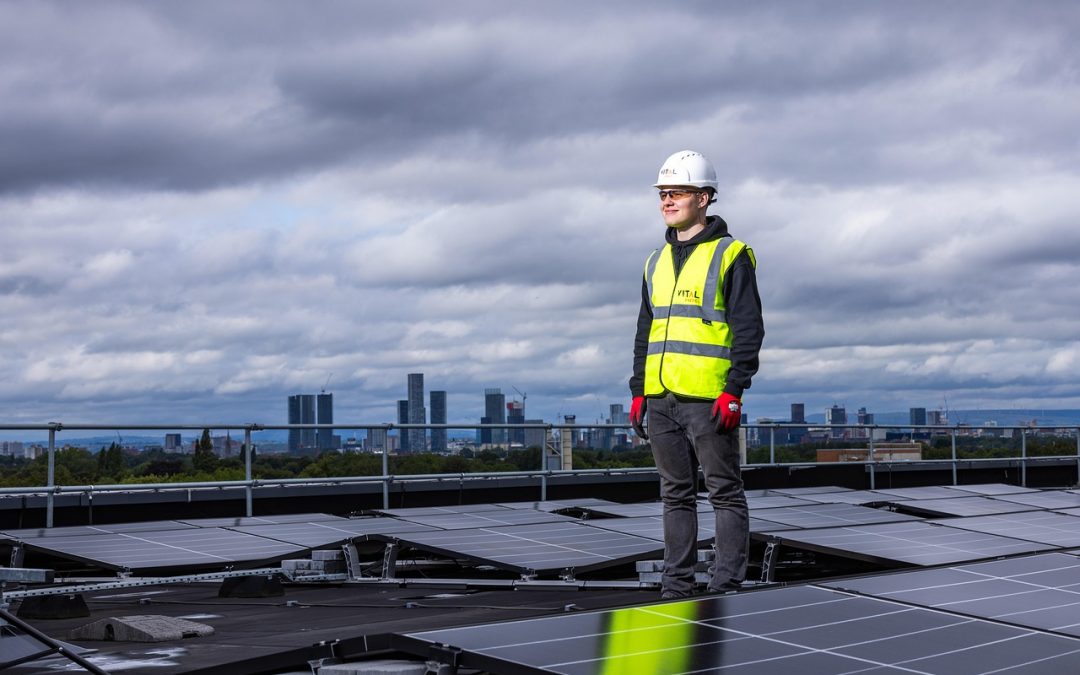
A solar array can produce electricity during sunny weather, but that does not necessarily mean your home will have power during a grid outage. Many grid-connected solar systems automatically shut down when the utility grid goes down. A battery system designed for backup can provide power to selected home circuits, and solar panels may be able to recharge it when conditions allow.
For homeowners in Maryland, Virginia, Pennsylvania, Delaware, and Washington, DC, backup planning starts with understanding what a battery can—and cannot—do. The right setup depends on your priorities, electrical system, solar equipment, and budget. Here is how to evaluate your options before requesting an estimate.
Why standard grid-tied solar may not work in an outage
Grid-connected solar systems are generally designed to operate with the utility grid. During an outage, the system’s safety controls typically disconnect it from the grid to help protect utility workers and equipment. This means solar panels alone may not keep household lights on, even when the sun is shining.
A battery system configured for backup can create a protected source of power for designated circuits. Depending on the equipment and system design, it may work with existing solar or be included in a new solar installation. Not every battery or solar inverter supports backup operation, so equipment compatibility and electrical design matter.
Decide what you want to keep running
Before comparing battery models, make a list of the appliances and devices you want available during an outage. A battery may be configured to support essential loads, or a larger system may serve more of the home. The best choice is not always the largest battery; it is the system that fits your needs and electrical constraints.
Consider grouping your priorities into categories:
- Essential: refrigerator, selected lights, phone charging, internet equipment, or medical devices that require electricity.
- Comfort and communication: a few outlets, a home office, or a window air conditioner, if the system can support its power demand.
- High-demand loads: central air conditioning, electric cooking, clothes dryers, water heaters, or vehicle charging, which may require substantially more capacity or a different backup plan.
A qualified installer can help evaluate both how much energy these devices use over time and how much power they need when starting. Those are related but different measurements. A battery might have enough stored energy for several hours of modest use yet be unable to start a particular motor or operate multiple large appliances at once.
Understand the main battery trade-offs
Battery capacity affects how long equipment can run. Power output affects how many appliances can operate simultaneously and whether the system can handle brief startup demands. The backup configuration also determines which circuits receive power when the grid is down.
Ask an installer to explain:
- Which circuits will be backed up and whether your electrical panel needs changes.
- How the battery behaves when its charge is low.
- Whether solar can recharge the battery during an outage, and under what conditions.
- How the system handles cloudy weather and repeated outages.
- What monitoring tools are available and what alerts you will receive.
Solar recharging during an outage is not automatic in every configuration. The answer depends on the inverter, battery, controls, and system design. Ask for a clear explanation of the expected operation rather than assuming that panels will continually refill the battery.
Plan around local conditions and household needs
Mid-Atlantic weather can bring strong storms, heavy rain, winter conditions, and summer heat. Outages may be short or last longer, and solar production can vary with season, cloud cover, roof orientation, and shading. No battery can guarantee uninterrupted power in every circumstance.
Think about the needs of everyone in the household. If someone relies on powered medical equipment, consult the equipment provider and discuss backup requirements with a qualified professional. Keep any manufacturer instructions and emergency guidance accessible. A battery is one part of an outage plan, not a substitute for following local emergency recommendations.
Compare proposals carefully
When requesting estimates, share your recent electricity bills if available, your outage priorities, and any plans to add an electric vehicle or heat pump. Ask for proposals to spell out the equipment, backed-up circuits, system limitations, installation scope, monitoring, and applicable warranty terms. Have the installer confirm that proposed equipment is compatible with your existing solar system, if you already have one.
Incentives, utility programs, interconnection requirements, and eligibility can change. Confirm current details with the relevant agency, utility, and tax professional before relying on them in your project budget. A reputable proposal should distinguish confirmed project details from assumptions that still need verification.
Frequently asked questions
Can a solar battery power my whole home?
It may be possible with an appropriately designed system, but whole-home backup is not the right fit for every property. Power demand, battery capacity, electrical equipment, and budget all affect the design.
Will my battery recharge from solar during every outage?
Not necessarily. It depends on the system’s components and configuration, as well as available sunlight and household use. Ask your installer to describe the operating conditions and limits.
Can I add a battery to existing solar panels?
Sometimes. Compatibility, inverter type, panel configuration, and electrical work need to be assessed before a battery can be selected.
Take the next step
A useful battery estimate begins with your priorities—not a one-size-fits-all equipment list. Renewable Energy Corporation has served Mid-Atlantic communities since 2007. Contact our team to discuss your home, review your backup goals, and request a solar-plus-storage estimate tailored to your situation.
Recent Comments