
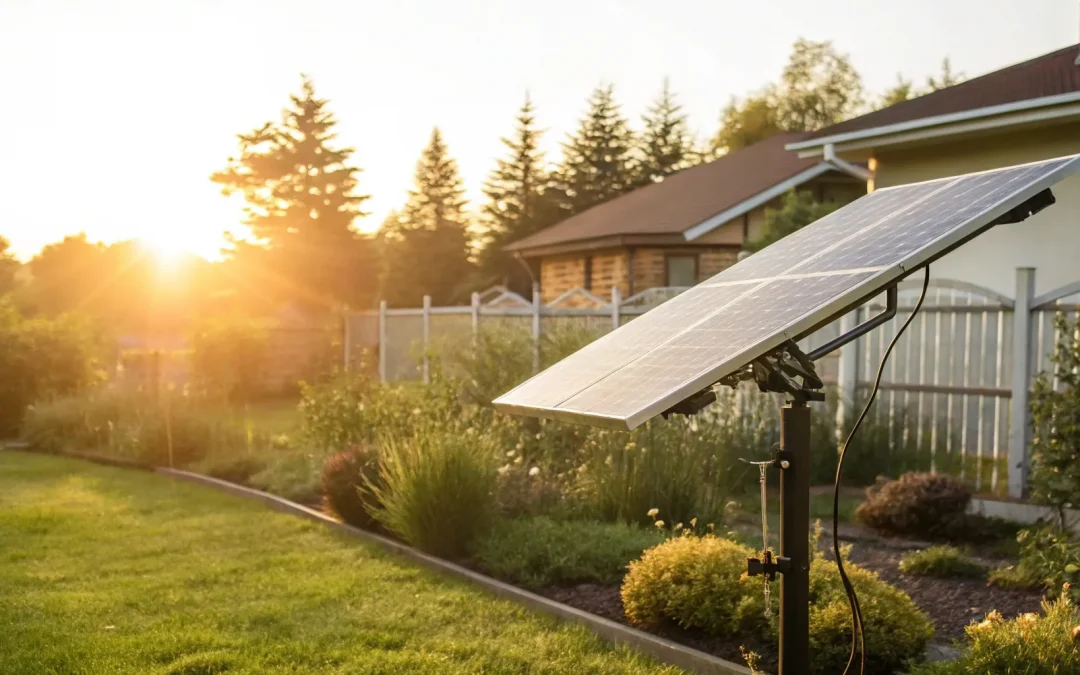
You’ve probably seen how a sunflower turns its head to follow the sun—it’s nature’s way of maximizing energy. A rotating solar panel mount applies that same principle to your home’s energy system. Instead of staying in one fixed position on your roof or yard, these mounts use motors and sensors to automatically adjust your panels throughout the day, keeping them perfectly angled towards the sun from morning to night. The goal is to capture every last drop of available sunlight. This can lead to a major increase in energy production, but it also introduces moving parts, higher costs, and a more complex installation. We’ll explore how these systems work, how much more energy you can really expect, and whether they make financial sense for the typical Mid-Atlantic homeowner.
Key Takeaways
- Solar Trackers Follow the Sun for More Power: These advanced mounts automatically adjust your panels to face the sun all day, which can increase energy generation by 30-40% over stationary panels.
- Fixed Mounts Usually Offer a Better Return: For most residential properties, the high upfront cost and ongoing maintenance of a rotating mount outweigh the energy gains, making a simpler fixed system a more cost-effective investment.
- Ground Space is a Must-Have: Rotating mounts are almost exclusively installed on the ground, not on roofs, and require a significant amount of clear, open land to function, making them impractical for many homes.
What Is a Rotating Solar Panel Mount?
If you’ve ever noticed how a sunflower turns its head to face the sun, you already have a basic idea of how a rotating solar panel mount works. Often called solar trackers, these are advanced mounting systems that move your solar panels throughout the day. Instead of staying in a fixed position on your roof, the panels automatically adjust their angle to follow the sun’s path across the sky. The goal is simple: to keep the panels in the most direct sunlight possible from sunrise to sunset.
This constant adjustment allows the panels to capture significantly more solar energy compared to traditional fixed mounts. Think of it as giving your solar array the best seat in the house all day long. By maximizing sun exposure, these systems can generate more electricity, which is great news for your energy bills. While they are more complex than a standard setup, the potential increase in energy production makes them an interesting option for homeowners looking to get the absolute most out of their solar panel installation. It’s a smart technology designed to optimize the performance of your entire system.
How They Follow the Sun
The magic behind a rotating mount is its ability to track the sun’s movement. Using sensors and motors, the system automatically tilts and turns the solar panels to maintain a direct line of sight with the sun. It’s a dynamic process that happens gradually throughout the day. In the morning, the panels will face east to greet the rising sun. As the day progresses, they slowly shift westward, tracking the sun’s arc across the sky until it sets. This continuous motion ensures your panels are always in the prime position to absorb the maximum amount of solar radiation, turning more sunlight into usable electricity for your home.
Single-Axis vs. Dual-Axis: What’s the Difference?
When you start looking at rotating mounts, you’ll see two main types: single-axis and dual-axis. A single-axis tracker moves your panels along one axis, typically from east to west, following the sun’s daily path. It’s a straightforward and effective way to capture more light than a fixed system. A dual-axis tracker takes it a step further. It moves the panels on two axes—not only east to west but also north to south. This allows the system to account for seasonal changes in the sun’s height in the sky. While more complex, this full range of motion means a dual-axis tracker can capture even more energy, keeping the panels perfectly angled toward the sun year-round.
Key Features and Modern Innovations
Today’s rotating solar mounts are designed for efficiency and durability. A key feature is their ability to generate more electricity from the same number of panels, making them ideal for properties where space is limited but energy needs are high. This can help you get more value from your investment and see the benefits of solar sooner. While it’s true that any system with moving parts will require more maintenance than a stationary one, modern trackers are built to be reliable. High-quality designs and materials have greatly reduced the need for frequent upkeep. They are also engineered to withstand the elements, including high winds, ensuring your system remains secure and productive for years to come.
How Much More Energy Can You Expect?
The main reason homeowners consider a rotating solar panel mount is simple: it generates more electricity. By tracking the sun’s movement across the sky, these systems capture more direct sunlight compared to their stationary counterparts. This increased exposure means your panels are working at their peak for more hours of the day, which translates directly into a higher energy yield and, ultimately, greater savings on your utility bills.
But how much more energy are we really talking about? The answer isn’t a single number. The performance gain depends on the type of tracking system you choose, your specific location, and even the time of year. A dual-axis tracker will produce more than a single-axis one, and a home in a consistently sunny area will see different results than one with more variable weather. Understanding these factors is key to figuring out if the additional energy output justifies the upfront investment for your home. Let’s break down what you can realistically expect.
Comparing Energy Output: Rotating vs. Fixed Mounts
When you compare rotating mounts to traditional fixed-mount systems, the difference in energy production is significant. Fixed panels are stationary, so they only capture optimal sunlight for a short period each day. Rotating mounts, however, adjust their angle to face the sun directly from sunrise to sunset.
Research shows that this constant adjustment makes a big impact. Single-axis trackers, which follow the sun on one axis (typically east to west), can increase energy output by 10–20%. Dual-axis systems, which track the sun both horizontally and vertically, can improve output by an impressive 30–40%. This extra power can make a huge difference in offsetting your home’s energy consumption and reducing your reliance on the grid.
How Your Location and Climate Affect Performance
Your home’s location plays a huge role in how much energy any solar panel system can produce. Factors like the amount of daily sunlight, typical cloud cover, and even air quality can influence your results. As you might expect, panel efficiency is highly affected by geographic location, and the Mid-Atlantic region has its own unique climate profile.
Interestingly, extreme heat can also be a factor. While we love sunny days, high temperatures can slightly reduce solar panel efficiency. A rotating mount can help compensate for these minor losses by maximizing sun exposure during the cooler, more efficient morning and late afternoon hours, giving you a more consistent energy supply throughout the day.
Seasonal Performance: What to Expect Year-Round
The sun’s path across the sky changes dramatically with the seasons. It’s much lower in the sky during the winter and higher during the summer. A fixed solar panel system is typically installed at an angle that’s a compromise for year-round production. A rotating mount, however, can adjust to these seasonal changes.
This adaptability means sun-tracking solar panels can generate significantly more energy, with common estimates landing in the 30-40% range over fixed systems. This is especially valuable during the shorter days of winter, helping you capture every available ray of sun. The extra energy you generate can be used immediately, sent back to the grid, or stored in a solar panel battery backup for use at night or on cloudy days.
Are Rotating Solar Panel Mounts Worth the Investment?
The idea of solar panels that follow the sun across the sky sounds like the ultimate in efficiency. And in theory, it is. But when it comes to your home, the most important question isn’t just about technology—it’s about value. A rotating solar panel mount, also known as a solar tracker, comes with a significantly higher price tag and more mechanical complexity than a traditional fixed system. So, does the extra energy they produce justify the extra cost? For most homeowners, the answer is often no. Let’s break down the numbers to see why a fixed system usually provides a better return on your investment.
Breaking Down the Cost vs. Benefit
A rotating solar panel mount can definitely generate more power than a stationary one. Studies show that a tracking system can produce 30% to 40% more energy over the course of a year. While that sounds impressive, this boost in production comes at a steep price. The equipment is more expensive, the installation is more complex, and the system requires ongoing maintenance due to its moving parts. For the average residential roof, the additional upfront cost for a tracking system typically outweighs the long-term financial gains from the extra energy. The primary benefits of going solar for homeowners—like lower utility bills and a faster return on investment—are often best achieved with a simpler, reliable fixed-mount system.
Calculating Your Payback Period
Your solar payback period is the time it takes for your energy savings to cover the initial cost of your system. Because rotating mounts are so much more expensive, they dramatically extend this timeline. For example, a single ground-mounted tracking system like the SmartFlower can cost between $25,000 and $30,000 before any incentives. A traditional fixed rooftop system for a whole home often costs less while producing plenty of energy to offset your bills. A longer payback period means you wait longer to enjoy pure savings. To understand the real numbers for your home, it’s always best to get a free solar estimate that compares the costs and production of a standard system.
When Does a Rotating Mount Make Financial Sense?
While rotating mounts aren’t usually practical for residential rooftops, they can be a smart choice in specific situations. Large-scale commercial or agricultural operations, for instance, might use solar trackers to maximize energy output on a large plot of land. If you have a lot of open ground and very high energy needs, a dual-axis tracker could be worth considering. However, you also have to factor in the added upkeep. According to Solar Power World, these systems require more maintenance than fixed racks. For most homeowners in the Mid-Atlantic, a high-quality, fixed solar panel installation offers the ideal balance of performance, reliability, and cost-effectiveness.
What Does Installation Involve?
Installing a rotating solar panel mount is a bit more involved than a standard fixed-mount system. Because these systems have moving parts and are often heavier, the process requires careful planning and professional expertise. It’s not just about attaching panels to a frame; it’s a construction project that involves structural assessments, foundation work, and precise electrical wiring to ensure everything runs safely and efficiently for decades.
From the initial site visit to the final inspection, every step is critical. A professional installer will evaluate your property’s unique characteristics, from the quality of your soil for a ground mount to the structural integrity of your roof. They also handle the complex engineering needed to make sure your system can withstand local weather conditions, like the high winds we sometimes see in the Mid-Atlantic. This careful approach ensures your investment is not only productive but also secure. As a company that has handled solar panel installation for years, we manage this entire process so you don’t have to worry about the details.
Site and Structural Requirements
Before any work begins, a thorough site assessment is essential. If you’re considering a rooftop rotating mount, we need to confirm your roof can handle the additional weight and dynamic load from the moving parts. This involves a structural check to prevent any damage. For ground-mounted systems, which are more common for trackers, we’ll evaluate the soil composition and topography. The ideal spot needs to be clear of trees or buildings that could cast shadows throughout the day, ensuring your panels have an unobstructed view of the sun from sunrise to sunset.
Foundations and Wind Resistance
A rotating solar mount needs a rock-solid foundation to operate reliably. For ground-mounted systems, this usually means pouring concrete footings deep into the ground to anchor the tracker. This foundation is engineered to support the system’s weight and resist uplift from strong winds. Designing these mounting systems is a complex task that requires a deep understanding of our local environmental conditions and structural requirements. The goal is to create a setup that is perfectly balanced and can withstand anything the weather throws at it, keeping your energy production safe and consistent.
Understanding Local Codes and Permits
Navigating local building codes and permits can be one of the trickiest parts of any home improvement project, and solar is no exception. Each county and municipality in Maryland, Virginia, and the surrounding states has its own set of rules for solar installations, especially for systems with moving parts. For example, some local codes have specific height restrictions or setback requirements from property lines. Our team handles all the paperwork and planning, from submitting the initial designs for approval to scheduling final inspections. We make sure your installation is fully compliant, so you can have complete peace of mind.
Installation Timeline and Complexity
Because of the added mechanical components, installing a rotating solar panel mount generally takes longer than a fixed system. The process starts with obtaining permits, which can take several weeks. Once approved, the physical installation involves building the foundation, assembling the tracking mechanism, mounting the panels, and running all the electrical wiring. While logistical hurdles can sometimes affect schedules, a typical residential tracker installation can be completed in a few days to a week. We’ll give you a clear timeline upfront when you request a free solar estimate.
How Much Do Rotating Solar Panel Mounts Cost?
Let’s talk numbers. When you’re looking at a rotating solar panel mount, you’re considering a premium piece of renewable energy technology, and the price tag reflects that. It’s a significant step up from traditional fixed-mount systems, and it’s important to understand what goes into that cost. The total investment isn’t just about the equipment itself; it includes the advanced tracking technology, the more complex installation process, and the long-term value it brings through increased energy production.
Think of it like buying a car. A basic, reliable sedan will get you where you need to go, but a high-performance vehicle with advanced features will have a higher upfront cost. Rotating mounts are the high-performance option in the solar world. They are engineered to capture every possible ray of sunlight, which requires sophisticated mechanics and smart technology. So, while the initial sticker price might seem high, it’s backed by a promise of greater efficiency and energy independence. We’ll break down the costs so you can see the full picture and decide if this powerful technology is the right fit for your home and your budget.
Breaking Down Equipment and Installation Costs
The upfront cost for a rotating solar panel mount system, like the all-in-one SmartFlower, typically falls between $25,000 and $30,000. This price covers the sophisticated hardware, including the tracker, motors, and controls. After you apply federal tax credits and other local incentives, the final cost often lands in the $17,000 to $20,000 range. This investment is higher than a standard solar panel installation because you’re paying for an active system with moving parts designed to maximize sun exposure from dawn until dusk. The installation is also more involved, requiring a specific foundation and careful calibration to ensure it functions perfectly.
Factoring in Long-Term Maintenance Costs
Any system with moving parts will naturally require more attention than a stationary one. While modern rotating mounts are built for durability, they do have more components—like motors and gears—that can wear down over time. You should plan for potential long-term maintenance costs. The quality of the solar tracker plays a huge role here; a well-engineered system will be more reliable and require less frequent service. It’s a good idea to discuss the maintenance schedule and warranty coverage with your installer to get a clear understanding of the expected upkeep. This helps you budget for the system’s entire lifespan, not just the initial purchase.
Financing and Incentives to Know About
While the initial cost is higher, a rotating mount’s biggest financial advantage is its impressive energy production. These systems can generate 30% to 40% more power each year compared to their fixed counterparts. This significant increase in output means you’ll see greater savings on your monthly utility bills, which helps offset the higher upfront investment and shortens your payback period. When you combine this enhanced production with federal solar tax credits and local incentives, the financial case becomes even stronger. To understand the specific benefits and costs for your property, getting a personalized quote is the best next step.
Maintenance and Reliability: What to Expect
Because rotating mounts have moving parts like motors and sensors, they naturally require more attention than fixed racks. Over time, these components can experience wear, and severe weather can add extra stress. The good news is that a high-quality tracker is built to handle these challenges. Choosing a durable system is your first line of defense. When you work with an experienced team for your solar panel installation, they can guide you toward reliable products. Should an issue arise, most fixes—like replacing a motor or recalibrating a sensor—are straightforward for a qualified technician to handle, keeping downtime to a minimum.
Your Maintenance Schedule and Checklist
The best way to keep your rotating mount running smoothly is with simple, regular inspections. While fixed panels require very little upkeep, a tracker benefits from a quick check-up a couple of times a year. This simple routine helps you catch small issues before they become bigger problems.
Here’s what to look for:
- Inspect for Damage: Look for any signs of corrosion or loose bolts on the structure.
- Listen for Noises: Pay attention to any grinding or unusual sounds from the motor.
- Clear the Area: Make sure no branches, leaves, or other debris are blocking the tracker’s path.
Many common questions about upkeep are also covered in our FAQ, which can be a great resource.
How Long Do Rotating Mounts Last?
A well-built rotating mount is designed for the long haul, with a lifespan that can match the 25-plus-year life of your solar panels. However, its longevity depends on the quality of the components, your local climate, and consistent maintenance. The steel structure is incredibly durable, but mechanical parts like the motor may need replacement after 10 to 15 years—a normal part of the system’s lifecycle. Choosing a reliable company ensures you have a partner for the entire life of your system. As a long-standing firm, we’re committed to providing that support, which you can read more about on our About Us page.
How to Choose the Right Rotating Solar Mount
Choosing the right rotating solar mount feels like a big decision, because it is. This piece of equipment is the foundation of your tracking system, and the right one will work quietly and efficiently for years to come. The market has a lot of options, and your choice will come down to your property, your budget, and your energy goals. To make a confident decision, you’ll want to compare different products, understand the technology behind them, and know which features truly matter for long-term performance. We’ll walk through the key considerations to help you find the perfect fit for your home’s solar setup. Think of it as finding the right partner for your solar panel installation—it needs to be reliable, effective, and built to last. Getting this choice right ensures you get the most out of the sun every single day.
Comparing Top Brands and Products
When you start looking at rotating mounts, you’ll find a wide range of brands and products. The best choice for your home depends on factors like how much space you have and the amount of direct sunlight your property gets. Some systems are sold as DIY kits, while others are only available through professional installers. As a family-run solar firm, we’ve seen firsthand that quality varies significantly between manufacturers. It’s wise to research brands known for their durability and solid warranties. A free solar estimate can help you understand which specific products are best suited for your unique situation, saving you from a one-size-fits-all solution that doesn’t fit at all.
Our Recommended Tracking Solutions
If your goal is to get the absolute most energy from your solar panels, a dual-axis tracking system is the way to go. Unlike single-axis trackers that only move on one plane, a dual-axis system moves both horizontally and vertically, following the sun’s exact path from sunrise to sunset. This precise tracking can help your solar panels produce at least 40% more electricity compared to fixed panels. While the initial investment is higher, the significant increase in energy production makes it a powerful option for homeowners who want to maximize their return and achieve greater energy independence. It’s the top-tier choice for performance.
Key Features to Look For
As you compare different rotating mounts, keep an eye on a few key features that separate the good from the great. First, look at the tracking technology itself. A quality system should be able to adjust your panels to follow the sun not just daily, but also through the seasons for year-round efficiency. Second, consider the maintenance. While modern trackers are very reliable, some still require more upkeep than a traditional fixed rack. The quality of the components plays a huge role here, so ask about the expected maintenance schedule. Finally, always check the warranty. A strong warranty on both the mechanical parts and the motor is a clear sign that the manufacturer stands behind their product’s durability.
Is a Rotating Mount Right for Your Home?
Deciding between a rotating and a fixed solar panel mount comes down to your specific property, budget, and energy goals. While the idea of panels that follow the sun is appealing, it’s not always the most practical or cost-effective solution for every home. Let’s walk through the key factors to help you figure out if a tracking system is the right move for you or if a traditional fixed setup is a better fit.
Is Your Property a Good Fit?
The first thing to consider is your location. Panel efficiency is directly tied to how much direct sunlight you get, which varies with geography and climate. In the Mid-Atlantic, we get a good amount of sun, but cloud cover can be a factor. A rotating mount can help maximize energy capture on clear days, but the gains might be less significant if your area is frequently overcast. You also need to look at your specific property. Do you have a large, open area free from shadows cast by trees or neighboring buildings? A tracking system needs unobstructed access to the sun from east to west to be effective. The best way to know for sure is to get a professional assessment of your property’s solar potential.
When to Stick with a Fixed Mount
For many homeowners, a fixed mount is the most sensible choice. The biggest advantage is simplicity. Because they have no moving parts, fixed systems require very little maintenance and are less likely to have mechanical issues over time. This “set it and forget it” approach offers peace of mind and predictable performance. Modern, high-efficiency panels are so effective that they often generate more than enough power for the average home without the added cost and complexity of a tracking system. If your primary goals are reliability and a lower upfront investment, a standard solar panel installation with a fixed mount is an excellent and dependable option.
Understanding Space and Property Limits
Rotating mounts need room to move, which means they are almost always installed on the ground rather than on a roof. This requires a significant amount of clear, level yard space for the foundation and the full range of motion. Rooftop installations are rare because the added weight and movement can stress the roof’s structure, and many local building codes have restrictions against them. Even a ground-mounted system needs a proper foundation to handle wind and weather. It’s crucial to work with an experienced installer who understands these structural requirements and is familiar with local permits and regulations to ensure your system is safe, compliant, and built to last.
Related Articles
- Solar Panel Maintenance Advancements: Drones for Safety
- Maintenance: the Hidden Aspect of Solar Panel Performance
- Advantages of a Ground-Mounted Solar System
- What Solar Panel Capacity Do I Need? A Simple Guide
- Maintaining Solar system installations for efficiency
Frequently Asked Questions
Why don’t more homeowners use rotating mounts if they generate more power? It really comes down to the balance of cost, complexity, and benefit. While rotating mounts do produce more energy, they come with a much higher price tag for both the equipment and the installation. For most residential homes, a traditional fixed-mount system with high-efficiency panels already generates plenty of power to significantly reduce or even eliminate electricity bills. The simpler, more reliable design of a fixed system often provides a faster return on your investment, which is the main goal for many homeowners.
Can I install a rotating solar panel mount on my roof? Generally, rotating mounts are not suitable for residential rooftops. These systems are significantly heavier than fixed racks and have moving parts that create a dynamic load, which can put a lot of stress on your home’s structure. Because of this, they are almost always installed on the ground where a solid concrete foundation can be built to support them safely and ensure they can withstand wind and weather without issue.
Is the maintenance for a tracking system a lot of work? It’s not a daily chore, but it does require more attention than a “set it and forget it” fixed system. A good practice is to visually inspect the system a couple of times a year to make sure no debris is blocking its movement and listen for any unusual noises from the motor. While the structure is built to last, the mechanical parts, like the motor, may need to be serviced or replaced after about a decade of use, which is a normal part of the system’s lifecycle.
How much more will a rotating system really save me on my energy bills? While a rotating mount can generate 30-40% more electricity, this doesn’t automatically translate into 30-40% more savings in your pocket over the long run. Because the initial investment is so much higher, it takes significantly longer for your energy savings to pay back the cost of the system. For many homeowners, the faster payback period of a more affordable fixed system leads to greater net savings over the life of the panels.
What’s the first step if I think a rotating mount might be right for my property? The best first step is to get a professional site assessment. A rotating mount requires a large, open, and shadow-free area on your property, so an expert needs to evaluate your specific site for suitability. They can analyze your sun exposure, check for any obstructions, and determine if your land is a good candidate. This evaluation will give you a clear picture of whether a tracking system is a practical option for your home.
Recent Comments