
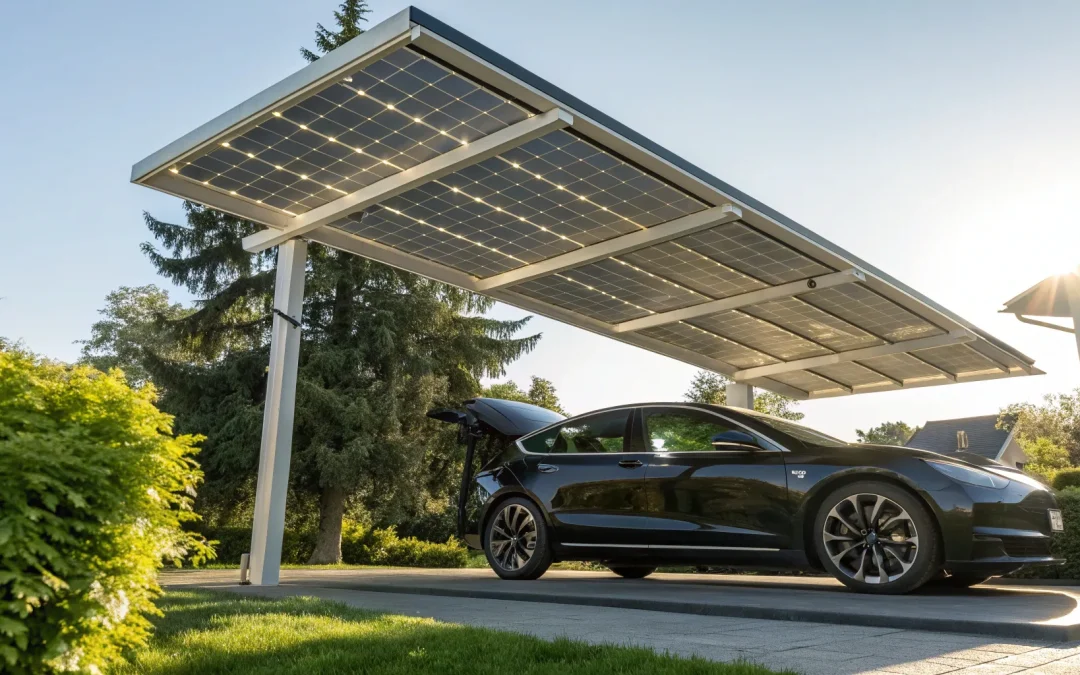
The idea of pulling into your driveway and plugging your car into your own private, sun-powered fuel source is incredibly appealing. You get to bypass the gas station forever and stop worrying about fluctuating utility bills. This is what energy independence looks like. It’s about taking control of your transportation costs and powering your life with clean, renewable energy you generate yourself. But turning this vision into a reality starts with a practical plan. To get there, you first need a clear understanding of the solar ev charging station cost. We’ll explore the investment required and show you how it pays for itself for years to come.
Key Takeaways
- Focus on long-term savings, not just the initial price: The upfront cost is a one-time investment that effectively ends your recurring, unpredictable expenses for gas or grid electricity. By generating your own clean fuel, you lock in stable transportation costs for decades.
- Incentives can dramatically lower your final cost: The sticker price is rarely what you actually pay. A 30% federal tax credit, combined with state and local rebates, can reduce your out-of-pocket expenses by thousands, making the project far more affordable.
- A solar charger is a key to energy independence: This setup does more than just power your car; it creates a self-sufficient home energy system. Adding a battery backup lets you store excess solar power to use at night or during a grid outage, giving you complete control over your energy.
What Is a Solar EV Charger?
Think of a solar EV charger as your own personal, clean energy gas station, right at your house. Instead of just plugging your electric vehicle into a standard wall outlet that draws power from the utility grid, a solar EV charger connects directly to your home’s solar panel system. This setup allows you to power your car with the clean, renewable energy you generate from the sun, effectively letting you drive on sunshine.
The system itself is a smart combination of a few key components working together. It starts with the solar panel installation on your roof, which captures sunlight. That energy then flows through a solar inverter, which converts it into usable electricity for your home and your charger. The final piece is the EV charging station, which delivers that solar-generated power straight to your vehicle’s battery. Many homeowners also choose to include a solar battery backup, which stores excess solar energy. This means you can still charge your car with sunshine even after the sun goes down or during a power outage. By pairing your EV with solar, you’re creating a complete home energy ecosystem, taking a huge step toward energy independence and making your eco-friendly car even greener.
How Does Solar EV Charging Work?
The process is surprisingly straightforward. First, the solar panels on your roof absorb sunlight and convert it into direct current (DC) electricity. Since your home and EV charger run on alternating current (AC) power, a solar panel inverter is essential. This device safely converts the DC electricity into AC electricity. From there, the power is sent to your home’s electrical panel, where it can be used to run your appliances or, in this case, power your EV charger. When you plug in your car, it receives clean energy directly from your solar panels. If you’re generating more solar power than you’re using, the excess can be stored in a solar panel battery backup or sent back to the grid.
Why Charge Your EV with Solar Power?
Pairing your electric vehicle with solar power offers some incredible advantages. The most obvious win is the cost savings. You’re essentially producing your own fuel for free, which dramatically cuts down on what you’d otherwise pay your utility company for electricity. This makes your transportation costs much more predictable and affordable. Beyond your wallet, charging with solar is one of the best things you can do for the environment. You’re using 100% clean energy, which means your EV has a truly zero-emissions footprint. This setup also gives you greater energy independence, one of the key benefits of solar, reducing your reliance on the grid and protecting you from rising electricity rates. It’s a powerful way to take control of your energy future.
How Much Does a Solar EV Charger Cost to Install?
Okay, let’s talk numbers. When you’re figuring out the budget for a solar EV charger, it helps to think of it in three main parts: the charger itself, the cost to get it installed, and the solar panels that will power it. Each piece has its own price tag, and understanding them separately makes the total cost much clearer. While every home is different, we can give you a free solar estimate to pinpoint your exact costs. For now, here’s a straightforward look at what you can expect to invest in each area.
Breaking Down Equipment Costs
First up is the hardware. The centerpiece of your setup is the wall-mounted Level 2 smart charger. For a quality unit with modern features, you can expect to spend between $1,100 and $2,000. The price difference usually comes down to things like charging speed, smart features (like app connectivity), and brand reputation. Investing in a reliable solar EV charger from the start ensures you get an efficient and user-friendly experience every time you plug in. Think of it as the foundation for your home’s clean energy fueling station.
Factoring in Installation and Labor
Once you have your charger, you’ll need a certified electrician to install it safely. The cost for a standard installation typically falls between $500 and $1,000. A “standard” job usually means the charger is placed conveniently near your main electrical panel. If your setup is more complex—for example, if the wiring needs to be run a long distance or your panel needs an upgrade—the cost could be higher. This isn’t a DIY project; professional installation is key for safety and making sure your new charger works perfectly with your home’s electrical system.
Comparing Costs by System Size
To power your EV with sunshine, you need the solar panels to match. If you already have a solar array, you might need to add between 8 and 12 more panels to generate enough extra electricity for your car. If you’re starting from scratch with a dedicated system just for your EV, a complete solar panel installation could range from $5,000 to $10,000. An investment in this range typically provides around 15 kWh of charging per day—often more than enough for the average daily commute. This turns your home into a personal, sun-powered gas station.
What Factors Influence the Final Price?
When you get a quote for a solar EV charger, you’ll notice the final number is more than just the cost of the charger itself. Several key components come together to determine your total investment. Understanding these factors will help you see exactly where your money is going and why one quote might differ from another. From the type of panels on your roof to the permits required by your town, let’s break down what shapes the final price tag.
Your Choice of Solar Panels
The type of solar panel installation you choose is one of the biggest drivers of the total cost. High-efficiency panels, like the QCELLS we use, might have a higher initial price, but they generate more power in less space. This means you could need fewer panels to charge your car, and you’ll see greater energy savings over the system’s lifespan. The number of panels you need also plays a role, which depends on factors like your daily commute, your home’s energy use, and how much direct sunlight your roof receives. It’s a balance between upfront investment and long-term performance.
EV Charger Features and Specs
Not all chargers are created equal. The specific solar EV charger model you select will have its own price tag based on its capabilities. A basic Level 2 charger will cost less than a “smart” charger with advanced features. Smart chargers often come with Wi-Fi connectivity and dedicated apps, allowing you to schedule charging sessions to take full advantage of peak sunlight hours. This helps ensure you’re using the free, clean energy you generate instead of pulling from the grid. Faster charging speeds can also increase the cost, so it’s important to choose a model that fits both your budget and your lifestyle.
Potential Electrical Upgrades
Your home’s current electrical system is another piece of the puzzle. To safely handle the power demands of a Level 2 EV charger, some homes—especially older ones—may need an electrical panel upgrade. This isn’t just a suggestion; it’s a critical step to ensure your system runs safely and efficiently without overloading your circuits. A professional will assess your current setup during your free solar estimate to see if any upgrades are needed. While this adds to the cost, think of it as an important investment in your home’s infrastructure that prepares it for future energy needs.
Site Prep and Local Permits
Before any work begins, there’s a bit of necessary prep and paperwork. Every installation requires permits from your local municipality to ensure it meets safety codes and regulations. The cost of these permits and the required inspections can vary quite a bit depending on where you live. While it might seem like a hassle, this process is non-negotiable and protects you as a homeowner. A trusted installer will manage all the permitting for you, rolling the fees into your total project cost. This way, you can be confident that your new charging station is installed correctly and completely up to code.
What Are the Ongoing Costs to Operate a Solar EV Charger?
One of the best parts about installing a solar EV charger is what happens after the installation is complete: you largely stop paying for fuel. Once your system is up and running, the ongoing operational costs are minimal. Think about it—the sun doesn’t send you a monthly bill. You’re shifting from a model of perpetually paying for gasoline or grid electricity to one where you own your power source.
Of course, no system is entirely “set it and forget it.” There are minor maintenance considerations and potential add-ons, like a battery, that can affect your long-term expenses. But when you compare these minimal costs to the volatile and ever-increasing price of gas and electricity from your utility company, the financial picture becomes very clear. You’re not just buying a piece of equipment; you’re investing in decades of clean, predictable, and incredibly cheap transportation fuel that’s generated right on your rooftop. Let’s break down what you can actually expect to pay over the life of your system.
Solar Charging vs. Grid Charging: A Cost Comparison
When you charge your EV with solar, your fuel is free. The energy comes directly from the sun, bypassing your utility meter. When you charge from the grid, you’re buying electricity from the utility company at their current rate, which can fluctuate daily and tends to rise over time. While charging from the grid is still cheaper than buying gasoline, it’s an ongoing expense you’ll never escape.
Powering your EV with solar slashes this cost dramatically. Every mile you drive using solar energy is a mile you didn’t have to pay the utility company for. The long-term benefits of solar extend beyond your car, helping to lower your home’s overall energy bill and giving you stable, predictable energy costs for years to come.
Planning for Maintenance and Upkeep
Modern solar energy systems are built to be incredibly durable and require very little maintenance. The solar panels themselves have no moving parts and can last for 25 years or more with just occasional cleaning to remove dirt or pollen. The most you’ll likely need to do is rinse them off with a hose.
The other core components, like the solar panel inverters that convert solar energy into usable electricity for your car, are also designed for a long lifespan. By choosing a reputable installer who uses high-quality equipment, you’re protected by robust manufacturer warranties. This means if a part does fail prematurely, you’re covered, minimizing any unexpected out-of-pocket expenses.
The Cost of Adding a Battery Backup
A solar EV charger works perfectly fine on its own during the day, but what about charging at night? That’s where a battery comes in. Adding a solar panel battery backup to your system allows you to store the excess solar energy your panels produce during the day. You can then use that stored, free energy to charge your EV overnight or power your home during a grid outage.
While a battery adds to the initial installation cost, it provides true energy independence. It ensures you’re using your own solar power around the clock, maximizing your savings and shielding you completely from utility rate hikes and blackouts. It turns your home into a self-sufficient energy hub.
How Can You Lower the Installation Cost?
The initial price tag for a solar EV charging setup can feel like a big hurdle, but it’s rarely the price you actually end up paying. A combination of federal, state, and local incentives can significantly reduce your upfront investment, making the switch to solar charging much more accessible. Think of these as powerful tools to help you fast-track your return on investment.
These programs are designed to encourage homeowners like you to adopt clean energy. By taking a little time to explore your options, you can shave thousands off the final cost and start enjoying the savings from day one. Let’s walk through the biggest cost-savers available.
Federal Tax Credits You Can Claim
The most significant financial incentive available is the federal Residential Clean Energy Credit. This isn’t a simple deduction; it’s a dollar-for-dollar credit that directly reduces the amount of federal income tax you owe. Currently, you can claim a credit for 30% of the total cost of your solar energy system, which includes the solar panels, the solar EV charger, any battery backup, and all installation costs.
For example, on a $30,000 system, a 30% credit means you could get $9,000 back on your taxes. This single incentive dramatically changes the financial picture, making a powerful home energy system a much more manageable investment. It’s a straightforward way the federal government helps you go green.
Finding State and Local Rebates
On top of the federal credit, many states and local municipalities offer their own unique incentives. These can come in the form of direct cash rebates, state tax credits, or grants that further lower your out-of-pocket costs. Because these programs are specific to your location, they can vary quite a bit. Maryland might have a grant program, while Virginia could offer a specific tax break.
The best way to find what’s available in your area is to check a comprehensive resource like the DSIRE database, which lists incentives by state. As your local solar experts, we stay on top of these programs and can help you identify every single rebate and credit you’re eligible for in the Mid-Atlantic region.
Utility Company Perks and Net Metering
Your local utility company is another great source for potential savings. Many offer one-time rebates to customers who install EV charging stations or solar panels. It’s always worth checking their website or giving them a call to see what programs they have for homeowners.
Beyond rebates, the biggest long-term financial perk is net metering. This is a billing arrangement where your utility company gives you credit for the excess electricity your solar panels generate and send back to the grid. This credit offsets the cost of any power you draw from the grid at night or on cloudy days. Net metering is one of the key benefits of going solar, as it maximizes your energy savings and shortens your system’s payback period.
How Much Money Will You Actually Save?
Alright, let’s get to the part you’ve been waiting for: the numbers. Installing a solar EV charger is an investment, and you want to know what the return will look like. The great news is that the savings start adding up from your very first charge and continue for the life of your system. It’s not just about reducing your carbon footprint; it’s about making a smart financial decision that lowers your monthly expenses and adds tangible value to your home.
Think of it this way: you’re essentially building your own private, clean-energy gas station right at home. Instead of being at the mercy of fluctuating gas prices or utility rate hikes, you take control of your energy costs. The savings are multifaceted, touching everything from your daily “fuel” expenses to long-term property value. We’ll break down what you can expect to save each year, how to figure out your payback period, and the lasting financial benefits of making the switch.
Your Yearly Savings at a Glance
When you stop paying for gas or relying solely on the grid, the savings are immediate and significant. Let’s look at the average annual costs for driving. According to data from Enphase, fueling a standard gasoline car costs about $1,260 per year. If you switch to an EV but use public chargers, you’re still looking at around $1,058. Charging at home with standard grid electricity is better, at about $662 annually.
But charging your EV with your own solar power? That drops the cost to just $415 per year. This means you could save over $800 each year compared to filling up at the pump. A solar EV charger effectively locks in your transportation energy costs for decades, protecting you from price volatility.
Calculating Your Payback Period and ROI
Your payback period is the time it takes for your energy savings to cover the initial installation cost. After that, every charge is pure savings. Several factors influence this timeline, including your driving habits, local electricity rates, and the size of your solar panel system. The return on investment (ROI) goes even further, measuring the total profitability of your system over its entire lifespan.
Many utility companies offer rebates and incentives that can significantly shorten your payback period by lowering the upfront cost. When you combine these with federal tax credits, the financial picture becomes even more attractive. We can help you understand all the available incentives and provide a free solar estimate that projects your specific payback period and long-term ROI, so you know exactly what to expect.
Long-Term Savings and Increased Home Value
Beyond the yearly savings, installing a solar EV charger is a strategic upgrade that adds lasting value to your property. Homes with solar installations are often more attractive to buyers, and adding an EV charger makes your home even more future-proof. It’s an amenity that sets your property apart, signaling a modern, energy-efficient home.
This investment also pays dividends in peace of mind. By generating your own clean electricity, you’re contributing to a healthier environment and a more stable energy future. The long-term benefits of energy independence are hard to put a price on, but they are a core part of the value you get. You’re not just buying a piece of equipment; you’re investing in a more sustainable and cost-effective lifestyle.
Common Myths About Solar EV Charging Costs
When it comes to a solar EV charger, the conversation often turns to cost. It’s a significant home upgrade, and it’s smart to have questions about the price tag. But there’s a lot of misinformation out there that can make the investment seem more daunting than it actually is. Let’s clear up a few common myths about what it really costs to power your car with the sun.
“It’s Too Expensive Upfront”—Let’s Talk About It
The initial price of a solar EV charging setup is often the biggest hurdle for homeowners. Yes, there is an upfront investment. But thinking of it only as a cost is missing the bigger picture. This is an investment in your home’s infrastructure and your energy independence. Once your system is installed, you’re essentially pre-paying for decades of clean fuel for your car at a fixed price. The ongoing operational costs are incredibly low, especially when you compare them to the unpredictable price of gasoline or grid electricity. A home solar EV charger is a completely different scale from the massive commercial stations you see in parking lots, making it a much more accessible project for your home.
Your Financing and Leasing Options
You don’t have to pay for the entire system out of pocket. Just like any other major home improvement, there are flexible financing options that allow you to spread the cost over time. Often, the monthly payment for a solar loan is less than what you were previously spending on gas and electricity, so you can start seeing savings right away. On top of that, many utility companies offer attractive rebate programs to encourage homeowners to install EV charging stations. When you combine these with federal and state tax incentives, the initial financial barrier becomes much more manageable. Getting a Free Solar Estimate is the best way to see what financing and incentives you qualify for.
“The Installation Is Too Complicated”—Is It Really?
The idea of installing solar panels, wiring, and a charger can sound overwhelming, but the process is more straightforward than you might think. A solar EV charging system consists of a few key components: solar panels on your roof, an inverter to convert the energy, and the charger itself. If you add a battery, it integrates seamlessly. With an experienced team, the entire process is managed for you. A professional installer handles the system design, secures the necessary permits, and completes the full Solar Panel Installation and charger setup. Modern smart chargers are designed to be user-friendly, automatically using excess solar power to charge your car so you don’t even have to think about it.
Is a Solar EV Charger a Smart Investment for You?
Deciding to add a solar EV charger to your home is a big step, and it’s smart to weigh all the angles before you commit. It’s not just about the initial price tag; it’s about understanding the long-term value for your wallet, your lifestyle, and the environment. To figure out if this investment makes sense for you, let’s break down the real costs of ownership, the benefits you can expect, and a few final details to keep in mind. This will give you a clear picture of what to expect and help you make a choice you feel confident about.
The True Cost of Ownership
When you think about cost, it’s helpful to look beyond the installation price. The true cost of ownership includes what you spend over the years to power your car. Charging your EV with solar at home costs, on average, around $415 per year. Compare that to using standard grid power at home, which is about $662 annually, or relying on public charging stations, which can run you over $1,000 a year. While the upfront cost for a dedicated solar EV charger system can range from $5,000 to $10,000, the year-over-year savings on “fuel” add up quickly, making the initial investment much more manageable in the long run.
Weighing the Financial and Environmental Wins
Pairing a solar energy system with an electric vehicle is one of the most effective ways to reduce your carbon footprint. Your solar panels generate clean electricity without producing any greenhouse gas emissions, meaning every mile you drive is powered by a truly renewable source. This combination is a powerful statement about your commitment to sustainability. Beyond the environmental impact, the financial benefits are substantial. You’re not just saving money on gas; you’re also protecting yourself from the unpredictable price hikes of both gasoline and grid electricity. It’s a win for the planet and a win for your budget.
Final Things to Consider Before You Install
Before moving forward, a few practical details can influence your project. The final cost can depend on the type of charger you choose and the current state of your home’s electrical system—sometimes, an upgrade is necessary to handle the load. The layout of your property might also play a role, especially if trenching is needed to run wiring. It’s also a great idea to look into federal tax credits and local incentives, as these can significantly lower your initial costs. The best first step is to get a professional assessment to understand your specific needs and get a clear, all-inclusive price. You can get a free solar estimate to see exactly what the project would look like for your home.
Related Articles
- Solar EV Charger Kit: The Ultimate Guide
- Home Solar EV Charger Installation | Renewable Energy
- Solar Powered EV Charger: A Buyer’s Guide
- Charge Your EV at Home with Solar Panels- QA Session
Frequently Asked Questions
How many solar panels will I actually need to charge my car? The exact number of panels depends on how much you drive, the efficiency of your car, and how much sun your roof gets. As a general rule, most drivers need between 8 and 12 dedicated panels to cover their daily commute. The best way to get a precise number is to have a professional assess your specific energy needs and driving habits during a home evaluation.
Can I still charge my car at night or on a cloudy day? Yes, you absolutely can. Your solar EV charging system gives you a couple of great options. If you include a solar battery backup, you can store the excess energy your panels generate during sunny days and use that stored power to charge your car overnight. Alternatively, your charger is still connected to the grid, so you always have the flexibility to pull electricity from your utility company when you need it.
I already have solar panels. Can I just add an EV charger to my existing system? In most cases, yes. If you already have a solar panel system, adding an EV charger is a very common and straightforward upgrade. A professional will first assess your current system to make sure it can handle the additional energy demand of charging a car. If needed, they can easily add a few more panels to your array to generate the extra power required.
How much faster is a Level 2 solar charger than just plugging my car into a standard wall outlet? The difference in charging speed is significant. Plugging your EV into a standard 120-volt wall outlet (a Level 1 charger) might only add about 3 to 5 miles of range for every hour it’s plugged in. A Level 2 charger, which is what we install, is much more powerful and can add 25 to 30 miles of range per hour, ensuring your car is fully charged and ready to go each morning.
Do I have to use solar power to charge my car once the system is installed? You have complete control over how you charge your car. Smart chargers can be programmed to prioritize using the free, clean energy from your solar panels whenever it’s available. However, the system is fully integrated with your home’s electrical panel, so you always have the option to draw power from the grid if you need a quick charge on a cloudy day or if your panels aren’t producing.
Recent Comments