
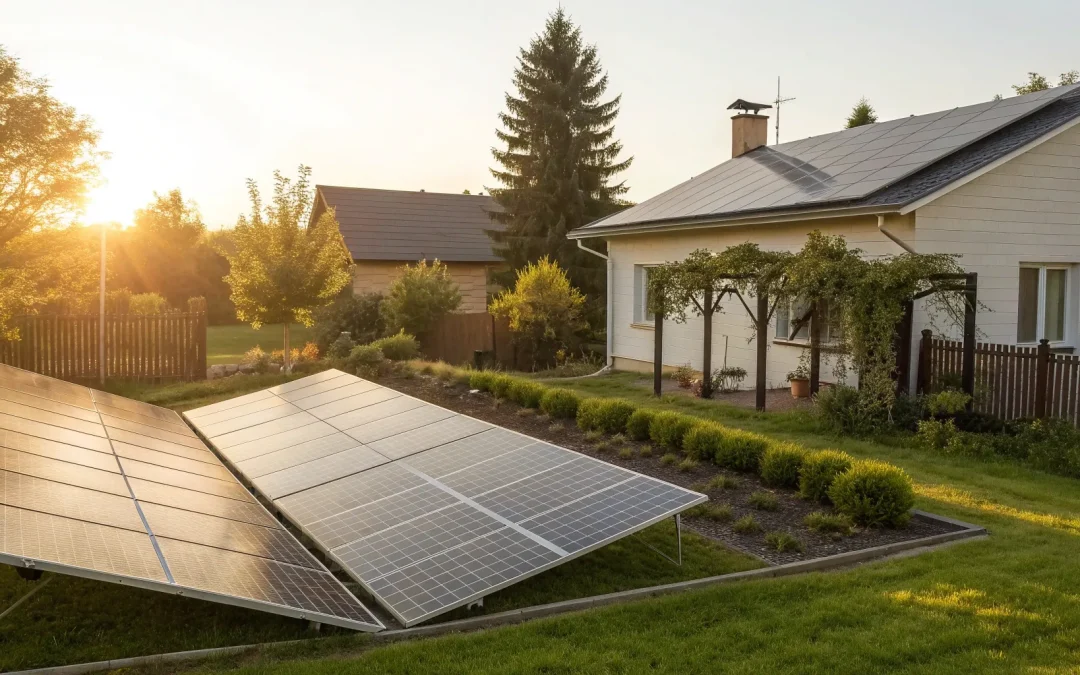
That open space in your yard is more than just a place for kids to play or a garden to grow—it’s a potential power plant for your home. If your roof isn’t ideal for solar panels due to shade or its direction, your land offers a perfect alternative. By choosing residential ground mounted solar panels, you can utilize your property to generate clean energy without ever having to drill into your roof. This option not only allows for optimal placement to maximize energy production but also makes tasks like cleaning and maintenance much easier, giving you a hassle-free path to energy independence.
Key Takeaways
- Optimize Your Energy Output: Unlike rooftop setups, ground-mounted systems can be placed in the sunniest part of your yard at the perfect angle. This ideal positioning often leads to higher energy production and greater long-term savings.
- Weigh the Upfront Investment Against Long-Term Value: Ground-mounted systems require open yard space and a larger initial budget for materials and labor. However, their superior energy production can result in a faster payback period, and tax credits can significantly reduce the net cost.
- Enjoy Simpler Maintenance and Future Flexibility: With panels at ground level, routine cleaning and inspections are safe and easy. This setup also simplifies future expansion, allowing you to add more panels as your energy needs grow without being limited by roof space.
What Are Ground-Mounted Solar Panels?
When you think of solar panels, you probably picture them on a roof. But what if your roof isn’t the best spot? Maybe it has too much shade, faces the wrong direction, or you simply don’t have enough space. That’s where ground-mounted solar panels come in.
Just as the name suggests, these are solar panel systems installed right in your yard or on an open piece of land. They offer a fantastic alternative, allowing you to harness solar power even when your rooftop isn’t ideal. By placing them on the ground, you gain more control over their placement and angle, which can make a big difference in your energy production.
How They Work
The setup for a ground-mounted system is straightforward but sturdy. First, strong posts are typically cemented into the ground to create a solid foundation. A durable racking structure is then built on top of these posts, and the solar panels are securely attached to it. The real magic of this approach is the ability to position the panels perfectly. Unlike a rooftop, which has a fixed angle and orientation, a ground-mounted system can be placed in the sunniest part of your yard and tilted at the ideal angle to capture the most sunlight throughout the day. This optimal positioning often means your system can generate more electricity than a comparable rooftop setup, maximizing your return on investment from your solar panel installation.
Common Types of Ground Mounts
Ground-mounted systems aren’t a one-size-fits-all solution; there are a couple of common designs to consider. The most popular is the standard ground mount, which uses a strong metal frame to hold your panels at a fixed angle. It’s a simple, reliable, and cost-effective choice for many properties. Alternatively, you could opt for a pole mount. This design secures several panels onto a single, tall pole, lifting them higher off the ground. A major advantage of pole mounts is that they can be equipped with tracking systems that automatically adjust the panels to follow the sun’s path across the sky. A professional can help you determine which type is the best fit for your land and energy goals when you get a free solar estimate.
Ground-Mounted vs. Rooftop Solar: What’s the Difference?
When you picture solar panels, you probably imagine them neatly lined up on a roof. While that’s the most common setup, it’s not your only option. Ground-mounted solar panels offer a powerful alternative, especially if your roof isn’t a perfect candidate for solar. Both rooftop and ground-mounted systems will help you generate clean energy and lower your utility bills, but they differ in a few key areas: performance, installation, and cost. Understanding these differences will help you decide which path to solar is the right one for your home and property.
Performance and Efficiency
The biggest advantage of a ground-mounted system is its potential for higher energy production. Rooftop panels are limited by the angle, direction, and shading of your roof. If your roof faces north or is covered by trees for part of the day, your production will be lower. With a ground-mounted system, we can place the panels in the sunniest part of your yard and tilt them at the absolute perfect angle to capture the maximum amount of sunlight year-round. This optimal positioning often means a ground-mounted array can be more efficient and generate more electricity than a similarly sized rooftop solar panel installation.
Installation and Requirements
A rooftop installation uses space you already have, but it does require drilling into your roof to secure the mounting hardware. While we ensure every installation is completely weatherproof and secure, some homeowners prefer to leave their roof untouched. Ground-mounted systems are a great solution here, as they don’t require any roof penetration. Instead, they are installed on a metal framework secured in your yard. The main requirement is space—you’ll need a clear, sunny area on your property. The exact amount of land depends on your energy needs, but it’s a key factor we’ll assess when you request a free solar estimate.
Cost and Long-Term Value
Let’s talk about the budget. Ground-mounted systems typically have a higher upfront cost than rooftop systems. This is because they require additional materials for the support structure, a concrete foundation, and trenching to run the electrical wiring to your house. However, it’s important to look at the long-term picture. Because ground-mounted panels can produce more energy, they can also generate more savings over the 25+ year lifespan of the system. For many homeowners, the increased energy output and long-term benefits of solar can make the initial investment well worth it, leading to a faster payback period and greater overall returns.
The Pros of Ground-Mounted Solar Panels
When you picture solar panels, you probably imagine them on a roof. But for homeowners with enough yard space, a ground-mounted system can be a game-changer. While they might not be the first option that comes to mind, they offer some compelling advantages that can make them the smartest choice for your property.
A ground-mounted solar panel installation gives you flexibility that a rooftop system just can’t match. Instead of being limited by your roof’s angle, direction, or size, you can design a system that’s perfectly tailored to your energy needs and your property’s unique layout. This freedom allows you to optimize every aspect of the installation, from panel placement to future system growth. If your roof has shading from trees, is older, or simply doesn’t face south, a ground-mounted array lets you bypass those issues entirely and harness the full power of the sun.
Maximize Your Energy Production
One of the biggest wins for ground-mounted panels is their ability to generate more electricity. Because they aren’t attached to a fixed roof, we can install them at the absolute perfect angle and orientation to capture the most sunlight throughout the day. This process, called optimizing the tilt and azimuth, ensures your panels are always in a prime position. If your roof doesn’t face south or is partially shaded, a ground-mounted system can easily outperform a rooftop one, helping you see a faster return on your investment and enjoy the full benefits of going solar.
Simplify Maintenance and Cleaning
Let’s be honest: climbing on your roof is a hassle and can be risky. With ground-mounted panels, you can forget the ladder. Their easy accessibility makes routine tasks like clearing away snow, dust, or fallen leaves a simple, ground-level job. While solar panels are famously low-maintenance, keeping them clean ensures they operate at peak efficiency. Being able to quickly inspect your panels and wiring without a rooftop trek gives you peace of mind and makes it much easier to keep your system in top shape for years to come.
Leave Room for Future Expansion
Your life and energy needs can change over time. You might buy an electric vehicle, add an extension to your home, or simply find your family using more power. A ground-mounted system offers incredible flexibility for the future. Since you aren’t limited by roof space, you can easily add more panels to your array down the road. This scalability means your solar energy system can grow with you, whether you’re adding a solar EV charger or a battery backup to store excess energy.
The Cons of Ground-Mounted Solar Panels
While ground-mounted solar panels offer some fantastic advantages, they aren’t the perfect fit for every home or budget. It’s important to look at the full picture before making a decision. The main challenges usually come down to the initial investment, the amount of space you need, and some common misunderstandings about their upkeep. Thinking through these points will help you decide if a ground-mounted system is the right long-term solution for your property and your financial goals.
Higher Upfront Cost
Let’s be direct: a ground-mounted solar system typically costs more to install than a rooftop system. The main reason is the need for a sturdy support structure. Unlike rooftop panels that use your existing roof, ground mounts require a metal framework built on a concrete foundation. This means more materials and more labor for site preparation, trenching for electrical lines, and assembly. On average, you can expect the initial price to be about 34% higher than a comparable rooftop setup. While this initial investment is larger, it’s worth weighing against the potential for higher energy production over the system’s lifetime. You can get a clearer picture of what to expect by requesting a free solar estimate.
Significant Space Requirements
The most obvious requirement for a ground-mounted system is land. You need a good amount of open, unshaded space to make it work. Generally, you’ll need at least 350 square feet of clear yard space for a standard residential array. This can be a significant hurdle if you have a smaller lot, a yard with mature trees, or live in a more densely populated area. Before you get too far into planning, it’s crucial to have a professional assess your property to see if you have a suitable location for a solar panel installation that will get enough direct sunlight to be effective.
Common Maintenance Myths
One of the biggest misconceptions about ground-mounted panels is that they are difficult and expensive to maintain. Many people worry that having a system in their yard will lead to constant upkeep, but that’s rarely the case. The truth is, solar panel maintenance is pretty minimal. For the most part, you just need to ensure the panels stay clean and aren’t covered by leaves, snow, or growing vegetation. In fact, because they are on the ground, these systems are often much easier to access for cleaning than panels on a steep roof. Don’t let the fear of constant work hold you back; the reality is much simpler.
Breaking Down the Cost of Ground-Mounted Solar
Let’s talk numbers. The price tag is often the biggest question mark for homeowners considering a switch to solar, and it’s true that ground-mounted systems typically require a larger initial investment than rooftop setups. This is mainly due to the extra labor and materials needed for the foundation and racking. However, the final cost isn’t just a single number—it’s a combination of equipment, installation, and some powerful financial incentives that can make it much more affordable than you might think.
Understanding the full financial picture means looking beyond the initial quote. We’ll explore how pricing is structured, the significant tax credits available to you, and how to calculate the long-term value of your investment. By breaking it down piece by piece, you can see how a ground-mounted system can be a smart financial move that pays for itself over time.
Understanding Your Quote
When you receive a quote for a ground-mounted solar system, you’ll see the price is often broken down by the “cost per watt.” Think of this like the price per square foot when you’re buying a house—it helps you compare apples to apples. Most residential ground-mounted systems range in size from about 8 kW to 30 kW, and the total cost will depend on how much energy you need to produce. A detailed quote will also factor in the specific equipment, like the panels and solar panel inverters, as well as labor and any necessary site prep, like trenching. To get a clear picture of the costs for your property, a personalized estimate is always the best first step.
Finding Tax Credits and Incentives
This is where the initial price starts to look much more manageable. One of the most significant financial perks is the 30% Federal Solar Tax Credit. This isn’t a simple deduction; it’s a dollar-for-dollar credit that reduces the amount of federal income tax you owe. For example, on a $60,000 system, this credit would save you $18,000 right off the bat. On top of that, many states and local governments offer their own rebates, grants, or tax credits. These additional financial benefits can further reduce your net cost, making the switch to solar even more attractive. It’s always worth checking for incentives specific to your area.
Financing and Calculating Your Payback Period
While an average 18-kilowatt ground-mounted system might cost around $61,000 before incentives, very few people pay that full amount upfront. Most homeowners use financing options to spread the cost over time, often resulting in a monthly payment that’s less than their old utility bill. The real goal is to figure out your “payback period”—the point at which your energy savings have completely paid off the system’s cost. With the potential to save tens of thousands on electricity bills over the 25-year lifespan of your panels, a ground-mounted system isn’t just an expense; it’s an investment in your home’s future. You can always discuss your options with a solar expert to find a plan that fits your budget.
Top Brands for Ground-Mounted Solar Panels
Choosing the right solar panels is a big decision, and the brand you select plays a huge role in your system’s long-term performance and reliability. Just like with any major home investment, quality matters. A well-made panel from a reputable manufacturer will deliver higher efficiency, better durability, and a stronger warranty, ensuring you get the most out of your ground-mounted system for decades to come. At Renewable Energy Corporation, we’ve spent years vetting manufacturers and only work with brands we trust to perform for our customers. We focus on partners who lead the industry in technology and stand behind their products with solid, long-term support.
Premium Panels We Trust
When you want the best of the best, premium panels deliver top-tier performance. We partner with industry leaders like QCELLS because they consistently produce some of the most efficient and durable panels on the market. These brands invest heavily in research and development, resulting in technology that generates more power, even in less-than-ideal conditions. A premium panel often comes with an efficiency rating of over 22% and a comprehensive 25-year product warranty that covers the hardware itself, not just its power output. This level of quality is what we recommend for homeowners looking for maximum energy production and peace of mind from their solar panel installation.
Reliable Mid-Range Options
You don’t always need the most expensive panel to get fantastic results. There are many reliable mid-range brands that offer an excellent balance of performance, quality, and cost. When evaluating these options, we look closely at the key metrics: power rating, efficiency, and warranty. A solid mid-range panel will still provide excellent energy output and come with a strong manufacturer’s warranty that protects your investment. These panels are a great fit for many homeowners, providing significant energy savings and reliable performance without the premium price tag. Choosing a quality mid-range option ensures you still receive the long-term benefits of solar power.
How to Vet a Manufacturer
Knowing what to look for in a manufacturer can help you feel confident in your choice. A reputable solar panel company is more than just a brand name; it’s an established business with a proven track record. We look for manufacturers with a physical presence, including dedicated offices and manufacturing facilities, and a history of industry involvement. It’s also important to compare the details, like product warranties, efficiency ratings, and the technology they use. Our commitment as your installer is to handle this vetting process for you, so you can be sure you’re getting a high-quality product from a company that will be around to support it.
Key Features to Look for in Solar Panels
Not all solar panels are created equal. When you’re investing in a system that will power your home for decades, you want to be sure you’re choosing high-quality, reliable components. While your solar installer will guide you toward the best options for your specific needs, it’s helpful to understand the key features that separate a great panel from a mediocre one. Think of it like shopping for a car—you want to know what’s under the hood.
Focusing on a few core characteristics will help you feel confident in your decision. We’ll walk through the three most important factors: efficiency, durability, and the warranty that backs it all up. These elements work together to ensure your ground-mounted system delivers maximum value and performance for years to come. At Renewable Energy Corporation, we exclusively use panels from trusted manufacturers like QCELLS, so you can rest assured you’re getting top-tier technology.
Efficiency and Performance Ratings
A solar panel’s efficiency rating tells you how much of the sunlight that hits it can be converted into usable electricity. A higher efficiency rating means the panel can generate more power in the same amount of space. This is especially important if you have limited yard space for your ground-mounted array or simply want to get the most energy production possible. Top-tier panels can reach efficiency ratings of over 22%, making them powerhouses of energy generation. When comparing options, look at the efficiency, power rating, and temperature coefficient to get a full picture of how a panel will perform in real-world conditions.
Durability and Weather Resistance
Your solar panels will be exposed to the elements 24/7, so they need to be tough. High-quality panels are engineered to withstand everything from heavy snow and high winds to summer heatwaves. This resilience ensures they keep performing optimally year after year with minimal upkeep. A durable solar panel installation is built to last, requiring little more than keeping the panels clean and clear of any shading from growing trees. This long-term durability is a key reason why solar is such a reliable and low-maintenance investment for homeowners in the Mid-Atlantic region.
Warranty and System Compatibility
A strong warranty is a direct reflection of a manufacturer’s confidence in its product. Most reputable solar panels come with a performance and product warranty of 25 years or more, giving you peace of mind that your investment is protected. Beyond the panel itself, it’s crucial that all components of your system work together seamlessly. Your panels need to be compatible with your solar panel inverters, which convert the DC electricity from the panels into the AC electricity your home uses. If you’re adding a battery, compatibility is even more important to ensure efficient energy storage and use.
Space and Installation Requirements
One of the biggest questions homeowners have about ground-mounted solar is what the installation actually looks like. It’s a valid concern—after all, this is your yard we’re talking about! The good news is that the process is more straightforward than you might think. Unlike rooftop systems, a ground-mounted solar panel installation offers more flexibility to design a system that fits your property and energy goals. Let’s walk through what to expect when it comes to space, permits, and site prep.
Calculating Your Land Needs
First, let’s talk about space. To get the most from your investment, your solar panels need a clear, unobstructed view of the sun. For a typical residential system, you’ll want at least 350 square feet of open land. This gives the panels enough room to capture maximum sunlight throughout the day without being shaded by trees or buildings. During our initial consultation, we’ll perform a detailed site assessment to find the perfect spot in your yard, ensuring your system is positioned for peak performance.
The Permitting Process
Every construction project requires permits, and solar is no exception. The process for ground-mounted panels, however, has a key advantage: we don’t have to drill into your roof. This simple fact can make permitting smoother and gives many homeowners peace of mind by eliminating any risk of roof leaks or structural strain. Our team has years of experience with local municipalities across the Mid-Atlantic, so we handle the entire permitting process for you, making sure everything is filed correctly so your project stays on track.
Foundation and Soil Prep
A strong foundation is essential for a durable solar array. Our installation process is designed to be robust and secure, ensuring your system can handle anything the weather throws at it. It starts with carefully mapping the site and planning the layout. From there, we dig the footings, set the posts in concrete, and build the racking that will hold your panels. We take care of every detail, from making sure the concrete is fully cured to adding the final cross pipes for stability. It’s a meticulous process that guarantees your system is built to last.
How Much Maintenance Do Ground Mounts Really Need?
One of the most common questions I hear from homeowners is about upkeep. The idea of installing a power-generating system in your yard can sound like you’re signing up for a new, complicated chore. The good news is that solar panels, especially ground-mounted ones, are surprisingly low-maintenance. They are built with durable materials to withstand the elements for decades with very little intervention.
Unlike a car that needs regular oil changes or a garden that needs constant weeding, your solar array is designed to be largely self-sufficient. Because ground-mounted systems are easily accessible, the few tasks you might need to do are much simpler and safer than climbing on a roof. Forget the idea of burdensome maintenance; your main job is to sit back and enjoy the lower energy bills. Let’s walk through what taking care of a ground-mounted system actually looks like.
The Truth About Cleaning
You can cross “scrubbing solar panels” off your weekly to-do list. For the most part, rain is all you need to wash away the dust and pollen that can accumulate on your panels. Here in the Mid-Atlantic, we typically get enough precipitation to keep them clean and operating efficiently. If you notice a stubborn film of dirt or bird droppings after a long dry spell, a simple spray with a garden hose from the ground is usually enough to do the trick. The easy access of a ground-mounted system makes this a quick, five-minute task, no ladders required. You can find more answers to common questions on our FAQ page.
DIY Maintenance Tasks
Beyond the occasional rinse, your primary maintenance task is simple observation. You’ll want to keep the area around your ground-mounted array clear to ensure nothing obstructs the sunlight. This might mean trimming back any fast-growing shrubs or tree limbs that could cast a shadow on your panels. It’s also a good idea to periodically walk around the installation to make sure no leaves, branches, or other debris have gotten stuck underneath the array. These simple checks help ensure your system continues to produce at its peak, letting you fully enjoy the benefits of solar energy.
Monitoring Your System’s Performance
Modern solar technology makes it incredibly easy to keep an eye on your system’s health without ever leaving your couch. Your installation will come with a monitoring app that connects to your system’s inverters, showing you exactly how much power your panels are generating in real-time. This is your first and best line of defense. If you ever notice a significant or unexpected drop in energy production, it’s a clear sign to give us a call. This hands-off approach allows you to track performance and ensures that the sophisticated solar panel inverters are doing their job perfectly.
Are Ground-Mounted Solar Panels Right for You?
Deciding between rooftop and ground-mounted solar panels comes down to your property, your energy goals, and your budget. While rooftop panels are the most common choice, a ground-mounted system can be a fantastic alternative, especially if your roof isn’t ideal for solar. Let’s walk through the key questions to help you figure out if a ground-mounted array is the right move for your home.
Is Your Property a Good Fit?
The first step is to look at your yard. Ground-mounted solar panels are a great solution when your roof has too much shade, faces the wrong direction, or has obstructions like skylights and vents. If your roof isn’t a good candidate, your land might be the perfect spot for a solar panel installation.
You’ll need a good amount of open, sunny space—generally at least 350 square feet, which is about the size of a two-car garage. This area should be clear of trees and buildings that could cast shadows on your panels throughout the day. Having this flexibility allows us to position the panels at the perfect angle to capture the maximum amount of sunlight, something that’s not always possible on a roof.
When Does a Ground Mount Make Financial Sense?
It’s true that ground-mounted systems typically have a higher upfront cost than rooftop solar, often around 34% more. This is because they require additional racking and a foundation, which adds to material and labor costs. However, that initial investment can pay off significantly in the long run. Because we can orient ground-mounted panels for optimal sun exposure, they often produce more electricity than a comparable rooftop system.
This higher energy production means greater savings on your utility bills over the life of the system. If you have a larger property with high energy consumption, the increased efficiency can make a ground-mounted system a very smart financial decision. To see how the numbers stack up for your specific situation, the best approach is to get a free solar estimate.
Related Articles
- Advantages of a Ground-Mounted Solar System
- The Ultimate Guide to Ground Mount Solar Racking Systems
- Installing Solar Panels (How to Add Solar to Your Home)
- Alternatives For Rooftop When Installing Solar Panels
Frequently Asked Questions
How much yard space do I actually need for a ground-mounted system? While a good starting point is about 350 square feet of open, sunny land, the exact amount really depends on your family’s energy needs. A home that uses more electricity will require a larger system with more panels, which naturally takes up more space. The best way to know for sure is to have a professional assess your property. We can help you find the perfect spot that maximizes sun exposure while fitting comfortably into your landscape.
Will having a solar array in my yard affect my property value? This is a great question, and the answer is a positive one. Studies have consistently shown that owning a solar energy system can increase a home’s value. A ground-mounted system can be a particularly strong selling point if your roof isn’t suitable for panels, as it makes clean energy possible for your property where it otherwise might not have been. It’s an upgrade that provides tangible savings on utility bills, which is always attractive to potential buyers.
Are ground-mounted panels safe to have in a yard where kids and pets play? Absolutely. Safety is a top priority in every installation. The entire system is built to meet strict electrical codes, with all wiring securely enclosed in conduit and buried underground. The support structure is incredibly sturdy and professionally engineered to be a permanent fixture in your yard, much like a deck or a shed. There are no sharp edges or easily accessible electrical components, so you can have peace of mind while your family enjoys the yard.
Why is the initial cost higher if the panels are easier to access for installation? It’s a bit of a paradox, but the higher cost isn’t due to the difficulty of the work, but rather the amount of materials and site preparation involved. A rooftop system uses your existing roof as the foundation. For a ground-mounted system, we have to build that foundation from scratch with concrete footings and a heavy-duty steel racking structure. This requires more materials and additional labor for tasks like digging and trenching, which contributes to the higher upfront price.
Can I still add a battery backup or EV charger to a ground-mounted system? Yes, and it’s a fantastic idea. Ground-mounted systems are fully compatible with additions like a solar panel battery backup or an EV charger. In fact, because you aren’t limited by roof space, planning for future expansion can be much simpler. Adding a battery allows you to store the extra energy your panels produce, giving you power during an outage and even more control over your energy bills.
Recent Comments