
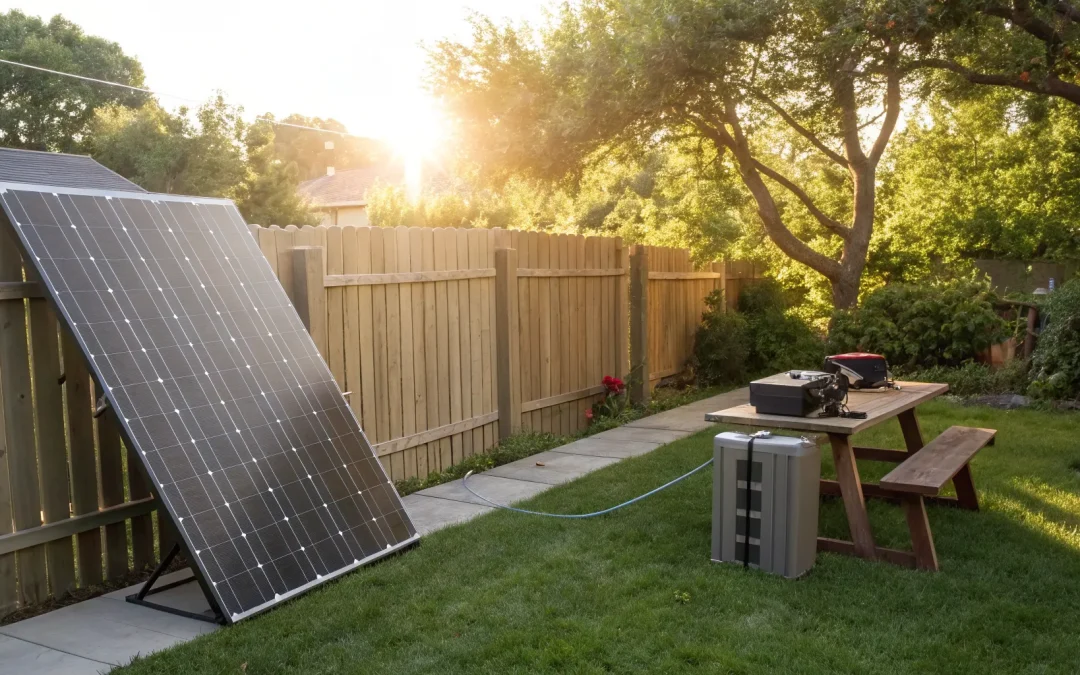
You have your 100-watt solar panel, ready to harness the sun’s power. But what’s the end goal? Maybe you want to keep essential devices running during a power outage, run lights in an off-grid cabin, or power a fan in your RV. Whatever your plan, the battery is the heart of your setup, storing that energy until you need it. Selecting the right battery for 100 watt solar panel applications is the critical step that turns your panel from a simple power generator into a truly useful and reliable power source. We’ll explore how to match a battery to your specific goals, ensuring you have dependable energy right when you need it.
Key Takeaways
- Look Beyond the Label: A 100-watt panel’s rating is its performance in perfect lab conditions. In reality, expect to generate between 280 and 400 watt-hours on an average day, which is the key number for planning your energy storage and use.
- Size Your Battery for Your Lifestyle: A 100Ah battery is a great starting point for a 100-watt panel, as it provides a safe energy buffer. To get it just right, calculate the daily power needs of your devices to ensure your battery can support your specific habits.
- Complete Your System with the Right Gear: Your panel and battery need supporting components to work safely and effectively. A properly sized charge controller prevents overcharging, an inverter makes your stored energy usable, and correct wiring is essential for performance.
How Much Power Does a 100-Watt Solar Panel Actually Produce?
It’s a great question, and the answer isn’t as simple as “100 watts.” Think of that number as the panel’s peak performance under perfect, lab-like conditions. In the real world, the actual amount of electricity your panel generates changes throughout the day and year. Factors like weather, the angle of the sun, and where you live all play a part. Understanding these variables helps you set realistic expectations for what a single panel can do and how it fits into a larger home energy system. Let’s break down what you can truly expect from a 100-watt panel.
Calculate Your Daily Energy Production
So, what can you actually expect on an average day? With about four to five hours of solid sunlight, a 100-watt panel will typically generate between 280 and 400 watt-hours (Wh) of energy. This is often enough to charge a small solar panel battery backup system or power a few small devices. The season makes a big difference, too. On a long, sunny summer day, that same panel might produce 600 to 700 Wh. In contrast, a cloudy winter day could yield as little as 100 Wh. These numbers are key to figuring out how many panels you’ll need for your specific goals.
What Affects Your Panel’s Output?
Several things determine how much power your panel produces day-to-day. The most obvious is the amount of direct sunlight it receives, often called “sun hours.” Cloudy days or shade from a nearby tree can significantly reduce output. The time of year also matters, as the sun is lower in the sky during winter. Beyond the weather, the panel’s own efficiency is a factor. Most modern panels convert 15% to 20% of sunlight into electricity. A professional solar panel installation accounts for these variables by positioning panels to capture the most sun possible throughout the year.
What Size Battery Do You Need for a 100-Watt Solar Panel?
Pairing your solar panel with the right battery is like finding the perfect dance partner—they need to be in sync to perform well. A battery that’s too small won’t store enough energy to be useful, while one that’s too large might never get fully charged by a single 100-watt panel. Finding that sweet spot ensures you have reliable power when you need it. Let’s walk through how to pick the right size for your setup.
Why a 100Ah 12V Battery is a Popular Choice
If you’re looking for a straightforward answer, a 100 amp-hour (Ah) 12-volt battery is often the go-to choice for a 100-watt solar panel. There’s a simple reason for this. A good rule of thumb is to have a battery that can store at least twice the amount of energy your panel generates in a day. This is especially important for certain battery types, like lead-acid, which shouldn’t be drained below 50% of their capacity. Regularly draining them completely can shorten their lifespan. A 100Ah battery gives you a healthy buffer, ensuring you have plenty of stored power without putting extra strain on the battery itself.
How to Calculate Your Exact Battery Needs
While the 100Ah battery is a great starting point, you can get more precise by doing a little math. On a decent day with about five to nine hours of sunlight, your 100-watt panel will send around 30 amp-hours to your battery. This means you’ll need a battery that can handle that daily charge while also powering your devices. By understanding this, you can better match your solar panel battery backup to your specific energy habits. Calculating your needs helps you build a system that’s tailored to you, so you’re never caught without power when you expect it.
Plan for Cloudy Days
We all know the weather isn’t always perfect. On an overcast day, your 100-watt panel’s output can drop significantly, sometimes only producing enough energy to charge a small 10Ah battery. So, how do you prepare for a string of cloudy days? You have two main options: increase your storage or increase your production. You can either invest in a larger battery bank to hold more reserve power or consider a solar panel installation with additional panels to capture more energy. Planning for less-than-ideal weather is key to creating a dependable solar power system you can count on year-round.
Which Battery Type is Best for Your 100-Watt Panel?
Once you know how much energy you need to store, the next step is picking the right type of battery. The two main players in the solar world are lead-acid and lithium-ion. Each has its own set of pros and cons, and the best one for you really depends on your budget, how you’ll use the power, and how much maintenance you’re willing to do. Think of this as a long-term investment in your energy independence. The battery you choose will be the heart of your solar setup, storing the sun’s power for you to use whenever you need it. We’ll break down the options so you can make a confident choice for your setup.
Lead-Acid: The Tried-and-True Option
Lead-acid batteries are the old guard of energy storage. They’ve been around for a long time, they’re reliable, and they are definitely the more cost-effective option upfront. You’ll often find them in off-grid setups like RVs and cabins. The most important thing to know about lead-acid batteries is that you shouldn’t drain them past 50% of their capacity. Doing so can shorten their lifespan significantly. To be safe, you’ll want to choose a battery with a capacity that’s at least double the daily energy your 100-watt panel produces. This gives you a healthy buffer and keeps your battery in good shape for years to come.
Lithium-Ion: The Modern, High-Performance Choice
Lithium-ion batteries are the newer technology on the block, and they pack a serious punch. While they come with a higher price tag, they offer some major advantages. They last much longer, are lighter, and can store more energy in a smaller package. A key benefit is their deep depth of discharge—you can use almost all of the stored energy without damaging the battery. This makes them a highly efficient choice for a home solar panel battery backup system. When sizing a lithium-ion battery, you only need a capacity slightly larger than your panel’s daily output, since you can use nearly its full storage potential.
AGM vs. Gel: What’s the Difference?
Within the lead-acid family, you’ll run into two specific types: AGM and Gel. Both are a step up from traditional flooded lead-acid batteries because they are sealed, meaning no water top-offs are needed. AGM, or Absorbent Glass Mat, batteries are maintenance-free and less likely to spill, making them a very convenient choice. Gel batteries use a silica gel to hold the electrolyte, which makes them extremely durable and even more resistant to spillage and deep discharges. Your choice between the two often comes down to your specific application and whether you prioritize convenience (AGM) or rugged durability (Gel).
How Long Will It Take to Charge Your Battery?
One of the most common questions we hear is, “How long will it take for my solar panel to charge my battery?” It’s a great question, but the answer isn’t a single number. The time it takes to charge your battery depends on a few key factors: the battery’s size and current charge level, the amount of direct sunlight your panel receives, and even the time of year. Think of it like filling a bucket with a garden hose—the time it takes depends on how big the bucket is, how much water is already in it, and how far you’ve turned on the tap.
Understanding these variables is key to managing your energy supply effectively. When you know roughly how long a full charge takes, you can better plan your energy usage, especially if you’re relying on a solar panel battery backup system during a power outage. While the math for a small 100-watt panel setup is fairly simple, calculating the needs for a whole-home system that powers your lights, appliances, and maybe even an EV charger requires a more detailed approach. That’s where a professional assessment can ensure your system is designed to meet your specific needs, day in and day out.
Figure Out Your Charging Time
Let’s start with the basics. A 100-watt solar panel is rated to produce 100 watts of power under ideal, standardized test conditions. The actual energy it produces is measured in watt-hours (Wh). A 100-watt solar panel can generate 100 watt-hours of energy for every hour it’s exposed to direct, peak sunlight.
So, on a clear, sunny day with about five hours of solid sunlight, that 100-watt panel can produce around 500 watt-hours of energy (100 watts x 5 hours). This simple calculation is your starting point for figuring out how much energy you can realistically capture and store in your battery each day.
How Your Battery’s Current Charge Affects Timing
Next, consider your battery’s state of charge. A completely drained battery will take much longer to fill than one that’s only partially used. To see how this works, let’s use a common example. A typical 12V 100Ah lead-acid battery requires about 1,200 watt-hours to reach a full charge from empty.
If your 100-watt panel is generating 500 Wh per day (as we calculated above), it would take about 2.4 days to completely charge that battery. This is why it’s important to know both your panel’s daily production and your battery’s total capacity. It helps you set realistic expectations for how quickly you can replenish your stored energy after a day of heavy use.
The Role of Weather and Seasons
Ideal sunny days are wonderful, but they aren’t always the reality, especially here in the Mid-Atlantic. Weather and seasons play a huge role in your panel’s output. On an overcast day or during the shorter days of winter, your panel’s production can drop significantly. In fact, on a cloudy winter day, your panel might only generate 100 watt-hours over the entire day.
This is a massive difference from the 500 watt-hours you might get on a summer afternoon. It highlights why planning for a few days of low sunlight is so important for a reliable system. When designing a system for your home, professionals account for local weather patterns and seasonal changes. You can get a free solar estimate to see how these factors would apply to your specific location.
What Affects Your Battery’s Charging Speed?
You might assume that a 100-watt panel will charge your battery at a consistent rate, but several real-world factors come into play. Think of it like filling a bucket in the rain—the speed depends on how hard it’s raining, where you place the bucket, and even the temperature outside. Understanding these variables helps you set realistic expectations and get the most out of your solar setup. From the angle of your panels to the quality of your components, each piece of the puzzle influences how quickly you can store that valuable solar energy in your solar panel battery backup system. Let’s walk through the main things that can speed up or slow down your charging time.
Sunlight and Panel Placement
This one might seem obvious, but it’s the most critical factor: your solar panel needs direct sunlight to work its best. More sun means a faster charge. Things like cloud cover, shade from a nearby tree, or even the time of day will reduce the amount of energy your panel can generate. To maximize sun exposure, your panel’s placement is key. Ideally, it should face south (if you’re in the Northern Hemisphere) and be tilted at an angle of about 30 to 45 degrees. Proper solar panel installation ensures your panel is in the perfect spot to soak up as much sun as possible throughout the day, giving your battery the steady charge it needs.
How Temperature Changes Performance
Here’s a surprising fact: solar panels don’t love extreme heat. While they need sunlight to produce electricity, scorching hot temperatures can actually make them less efficient. Most panels are tested at around 77°F (25°C), and their performance can dip slightly as the temperature climbs. This is a normal characteristic of solar technology. A cool, sunny day is actually the perfect condition for peak performance. So, if you notice slightly slower charging on a hot summer afternoon, don’t worry. Your system is still working hard; it’s just adjusting to the heat, which is a completely expected behavior for high-quality solar equipment.
Choose the Right Charge Controller
A solar charge controller is a small but mighty device that acts as the gatekeeper between your solar panel and your battery. Its main job is to regulate the voltage and current coming from the panel to prevent your battery from overcharging, which can cause damage and shorten its lifespan. A good charge controller ensures your battery receives a safe and efficient charge, helping it fill up faster and last longer. It’s essential to pick a controller that matches your system’s voltage—for example, a 12V controller for a 12V battery. This simple component is vital for protecting your investment and keeping your entire solar setup running smoothly.
What Else Do You Need for Your Solar Battery Setup?
Once you’ve picked out your solar panel and battery, you’re almost there! But to connect everything safely and make it work, you’ll need a few more key components. Think of these as the essential accessories that bring your whole system to life. Getting the right charge controller, inverter, and wiring is just as important as the main hardware. These pieces ensure your system runs efficiently, protects your investment from damage, and, most importantly, keeps everything safe.
MPPT vs. PWM Charge Controllers
A solar charge controller is the brain of your setup. It manages the flow of power from the solar panel to the battery, preventing it from overcharging and getting damaged. For a 100-watt panel and a 12V battery, a 10-amp charge controller is usually a solid choice. You’ll come across two main types: PWM (Pulse Width Modulation) and MPPT (Maximum Power Point Tracking). PWM controllers are simpler and more affordable, a good fit for smaller systems. MPPT controllers are more advanced and can capture up to 30% more power from your panels, especially on cloudy days. While they cost more, their efficiency often makes them a worthwhile investment.
Inverters, Fuses, and Other Safety Gear
Your battery stores power as direct current (DC), but most of your home appliances run on alternating current (AC). That’s where an inverter comes in. A solar panel inverter converts the DC power from your battery into usable AC power. When choosing one, a good rule of thumb is to pick an inverter with a capacity that’s 10% to 20% higher than the biggest power load you plan to use. Safety is also a top priority. Fuses and circuit breakers are non-negotiable. They protect your equipment from power surges and short circuits, which could otherwise cause serious damage or even a fire. Don’t skip these.
The Importance of Proper Wiring
Connecting all your components with the right wiring is critical for performance and safety. The wire’s size, or gauge, needs to match the current and distance between components. Using wires that are too thin can cause them to overheat, creating a fire risk and reducing efficiency. It’s also important to ensure your panel and battery are a good match. A 100-watt panel is typically well-suited for batteries up to 100Ah. If you have a larger battery bank, you might need more panels to charge it effectively. If you’re feeling unsure about the technical details, it’s always a great idea to get a professional opinion to ensure your system is set up for success.
How to Match Your Battery to Your Energy Needs
Choosing the right battery for your solar panel feels a bit like packing for a trip—you need to think about what you’ll need and for how long. It’s not just about picking the biggest battery; it’s about finding the one that fits your specific energy habits. A well-matched solar panel battery backup system ensures you have reliable power when you need it, whether you’re keeping the lights on during an outage or just powering a few off-grid essentials. This process is all about aligning the technical specs of a battery with your real-world lifestyle.
Let’s walk through how to figure out exactly what you need so you can invest in a system that works perfectly for you. The goal is to find that sweet spot where you have enough power stored for your needs without overspending on capacity you’ll never use. It all starts with a simple look at your daily routine and the devices that are most important to you. Before you can select the right size and type of battery, you need a clear picture of your energy consumption. Think about what you absolutely need to run during a power outage or what you want to power consistently with solar energy. This simple audit of your energy use is the most critical step in building a reliable and efficient solar power system.
Tally Your Daily Power Usage
First, grab a pen and paper and make a list of the electronics you plan to power with your 100-watt panel. For each device, find its wattage (usually on the label or power adapter) and estimate how many hours you’ll use it per day. Multiply the watts by the hours to get the daily watt-hours (Wh) for each item, then add them all up. This total is your daily energy target. As a rule of thumb, your battery should be able to store at least twice the amount of energy your panel generates in a day. This is especially true for certain battery types, like lead-acid, which last longer if you don’t drain them below 50% capacity.
What Will You Power and for How Long?
Now that you have your daily energy number, let’s put it in perspective. On a good day with plenty of sun, a 100-watt solar panel can send about 30 amp-hours (Ah) of energy to your battery. That’s enough to run a small fan for a few hours, charge your laptop, and keep your phone topped off. However, remember that output changes with the seasons. You might get 600-700 watt-hours on a long summer day, but that can drop to 100 watt-hours on a cloudy winter day. This is why it’s so important to plan for your needs and consider a battery that can hold a few days’ worth of power, giving you a reliable cushion. If you’d like help crunching the numbers for your home, you can always get a personalized estimate from our team.
How to Keep Your Battery Running Smoothly
Once your solar system is up and running, a little bit of care goes a long way in making sure your battery performs well for years to come. Think of it like maintaining your car; you don’t have to be a mechanic, but regular check-ins and good habits help you get the most out of your investment. Proper maintenance ensures your battery stores energy efficiently and reliably, so you have power right when you need it, whether it’s during a grid outage or just to lower your evening energy bills.
The great news is that modern solar batteries don’t require a lot of hands-on work. Most of the “maintenance” is about establishing good habits and ensuring your system is set up correctly from the start. It’s less about weekend projects and more about being mindful of how the system operates. By following a few simple guidelines, you can extend the life of your battery and keep your entire solar energy system in top shape. It’s all about creating the right conditions for your battery to do its job effectively, day in and day out.
Why You Shouldn’t Drain Your Battery Completely
It might seem logical to use every last drop of stored power, but completely draining your solar battery can actually shorten its lifespan. This is especially true for certain types, like lead-acid batteries. A good rule of thumb is to avoid draining these batteries below 50% of their total capacity. This concept is known as the “depth of discharge” (DoD). Consistently pushing your battery to a deep discharge puts extra stress on its internal components, causing it to wear out faster. Properly sizing your solar panel battery backup system from the beginning helps ensure you have enough stored power for your needs without having to drain it completely on a regular basis.
Simple Tips for Temperature Control and Upkeep
Your battery’s environment plays a big role in its health and performance. Extreme heat or cold can reduce its efficiency and longevity, so it’s best to install it in a place with a stable temperature, like a garage or basement, away from direct sunlight. You should also make sure your solar panel is positioned to get as much direct sun as possible, ideally at a 30 to 45-degree angle. This ensures it can generate enough power to charge the battery effectively. A professional solar panel installation will handle this for you, ensuring your system is perfectly matched and positioned for optimal performance from day one.
Common Mistakes to Avoid When Choosing a Battery
Choosing the right battery is just as important as picking the right solar panel. A great panel paired with the wrong battery can lead to frustration and a system that doesn’t meet your needs. Let’s walk through a couple of common missteps so you can get your setup right from the start and feel confident in your energy independence. Getting these details right ensures your system works efficiently, especially when you need it most.
Mistake #1: Buying a Battery That’s Too Small
One of the most frequent errors is underestimating your storage needs and getting a battery that’s too small. If your battery can’t hold enough charge, you’ll find yourself without power when you expect it. A good rule of thumb is to have a battery that can store at least twice the amount of energy your panel generates in a single day. For a 100-watt solar panel, which produces about 30 amp-hours on a good day, a 100 Ah 12V battery is a solid starting point. This gives you a reliable cushion, ensuring your solar panel battery backup has plenty of power stored for overcast days or overnight use.
Mistake #2: Ignoring Key Battery Specs
It’s easy to get overwhelmed by technical specifications, but overlooking them can be a costly mistake. Your 100-watt panel’s output can vary dramatically, from 600-700 watt-hours on a perfect summer day to just 100 watt-hours in the winter. Your battery needs to handle this reality. Also, keep in mind that charging isn’t instant; it can take 10 to 14 hours of sunlight to fully charge a standard 12V battery. Another critical piece of the puzzle is the charge controller, which protects your battery from overcharging. For a 100-watt panel and a 12V battery, a 10-amp charge controller is typically the right fit, ensuring your entire solar panel installation runs safely and efficiently.
Related Articles
Frequently Asked Questions
Will a single 100-watt panel be enough to power my house? A single 100-watt panel is a fantastic tool for smaller jobs, like charging phones and laptops, running a small fan, or powering lights in an RV or shed. However, it isn’t designed to handle the energy demands of an entire home, which includes appliances like refrigerators, air conditioners, and washing machines. A whole-home system involves a custom-designed array of multiple panels to meet your specific daily energy needs.
Is a more expensive lithium battery really worth the extra cost? This really comes down to your priorities and how you’ll use the system. Lead-acid batteries are a reliable, budget-friendly choice to get started. Lithium batteries, while more of an upfront investment, tend to last much longer, are lighter, and allow you to use nearly all of their stored energy without causing damage. If you value long-term performance and efficiency, the extra cost for lithium is often justified over the life of the system.
What happens on cloudy days? Will my system be useless? Not at all. Your solar panel will still generate power on overcast days, just not as much as it would in direct sunlight. This is precisely why having the right size battery is so important. A well-planned system includes enough storage capacity to get you through a few cloudy days, providing a reliable energy buffer so you’re not left in the dark when the weather isn’t perfect.
Can I just connect a solar panel directly to a battery to charge it? You should never connect a panel directly to a battery. You need a component called a charge controller to go between them. Think of it as a smart gatekeeper that manages the flow of energy. It prevents the panel from overcharging your battery, which can cause permanent damage and significantly shorten its lifespan. It’s a small but essential piece of equipment for a safe and effective setup.
How do I figure out if a 100-watt panel setup is enough for me? The best way to start is by making a quick list of the specific devices you want to power. Note the wattage of each item and estimate how many hours you’ll use it daily. This simple calculation gives you a target for your daily energy needs. It will quickly show you if a 100-watt panel is a good fit for your goals or if you should look into a larger system to cover more of your energy use.
Recent Comments